 W
WMichael William Balfe was an Irish composer, best remembered for his operas, especially The Bohemian Girl.
 W
WGerald Barry is an Irish composer.
 W
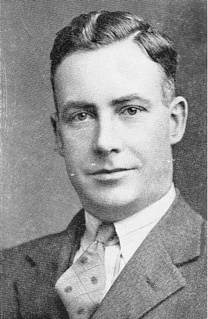
WMichael Andrew Bowles [in Gaelic: Micheál Ó Baoighill] was an Irish conductor and composer, who was also active in New Zealand, the US, and England.
 W
WIna Boyle was an Irish composer: the most prolific and significant female composer from Ireland before 1950. Her compositions encompass a broad spectrum of genres and include choral, chamber and orchestral works as well as opera, ballet and vocal music. While a number of her works, namely, The Magic Harp (1919), Colin Clout (1921), Gaelic Hymns (1923–24), Glencree (1924-27) and Wildgeese (1942), received acknowledgement and repeated performances during her lifetime, the majority of her compositions remain unpublished and unperformed.
 W
WFriedrich Wilhelm Anton Brase, known as Fritz Brase, was a German military bandmaster, conductor, and composer who was mainly active in Dublin, Ireland, as leader of the first Army School of Music in the Irish Free State.
 W
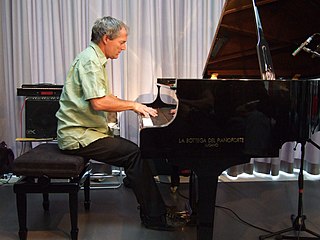
WJohn Wolf Brennan is an Irish pianist, organist, melodica player, and composer based in Weggis, Switzerland.
 W
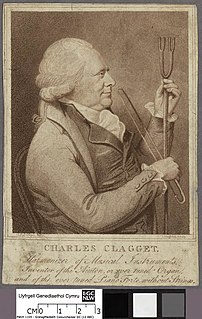
WCharles Clagget [also spelled Claget, Claggett, Claggitt] was an Irish musician, composer, and inventor of improvements for musical instruments.
 W
WDonnacha Dennehy is an Irish composer and leader of the Crash Ensemble specializing in contemporary art music.
 W
WMary Dickenson-Auner was an Irish violinist, composer, and music teacher. She wrote symphonies, oratorios, operas, and chamber works, with some of her early works appearing under the pseudonym Frank Donnell. During her career as a professional violinist, she performed the world premiere of Béla Bartók's Violin Sonata No. 1 and also worked with Arnold Schoenberg.
 W
WRoger Doyle is an Irish composer best known for his electro-acoustic work, for which he was made a Saoi of Aosdána, and for his piano music for theatre.
 W
WHormoz Farhat is a Persian-American composer, ethnomusicologist and emeritus professor of music, a fellow of Trinity College, Dublin.
 W
WJohn Field was an Irish pianist, composer, and teacher. Field is best known as the inventor of the nocturne, but there is evidence to suggest that this is a posthumous accolade. He is mentioned in passing in War and Peace when Countess Rostova calls on the Rostov household musician to play her favourite nocturne.
 W
WLord Otho Augustus FitzGerald PC was a British soldier and Liberal politician. He notably served as Comptroller of the Household under William Gladstone between 1868 and 1874. He was also a noted amateur composer.
 W
WAloys Fleischmann was an Irish composer, musicologist, professor, conductor.
 W
WWilliam Henry Grattan Flood was a noted Irish author, composer, musicologist, and historian. As a writer and ecclesiastical composer, his personal contributions to Irish music produced enduring works, although he is regarded today as controversial due to the inaccuracy of some of his work. As a historian, his output was prolific on topics of local and national historical or biographical interest.
 W
WCharlotte Olivia Milligan Fox was an Irish composer, folk music collector and writer.
 W
WWilliam Percy French was one of Ireland's foremost songwriters and entertainers in his day. In more recent times, he has become recognised for his watercolour paintings.
 W
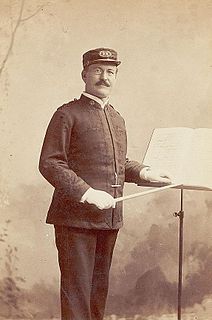
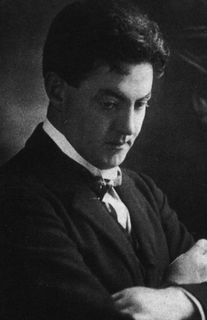
WPatrick Sarsfield Gilmore was an Irish-born American composer and bandmaster who lived and worked in the United States after 1848. While serving in the Union Army during the U.S. Civil War, Gilmore wrote the lyrics to the song "When Johnny Comes Marching Home". This was published under the pseudonym Louis Lambert in September 1863.
 W
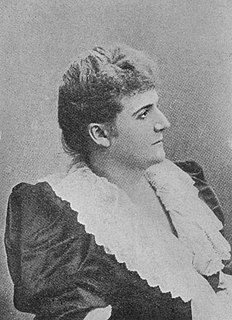
WSir Herbert Hamilton Harty was an Irish composer, conductor, pianist and organist.
 W
WAugusta Holmès was a French composer of Irish descent. At first she published under the pseudonym Hermann Zenta. In 1871, Holmès became a French citizen and added the accent to her last name. She herself wrote the lyrics to almost all her songs and oratorios, as well as the libretto of her opera La Montagne Noire and the programmatic poems for her symphonic poems including Irlande and Andromède.
 W
WMichael Kelly was an Irish singer (tenor), composer and theatrical manager who made an international career of importance in musical history. One of the leading figures in British musical theatre around the turn of the nineteenth century, and a close associate of Richard Sheridan's, he had been a friend of Mozart and Paisiello, and created roles in operas of both. With his friend Nancy Storace, he was one of the first singers in that age from Britain and Ireland to make a front-rank reputation in Italy and Austria. In Italy he was also known as O'Kelly or even Signor Ochelli. Although the primary source for his life is his Reminiscences, it has been said 'Any statement of Kelly's is immediately suspect.'
 W
WRichard Michael Levey was an Irish violinist, conductor, composer, and teacher. He was one of a handful of noted musicians who kept Dublin's concert life in the nineteenth century alive under difficult economic circumstances.
 W
WJohann Bernhard Logier was a German composer, teacher, inventor, and publisher resident in Ireland for most of his life.
 W
WSamuel Lover, also known as "Ben Trovato", was an Irish songwriter, composer, novelist, and a painter of portraits, chiefly miniatures. He was the grandfather of Victor Herbert.
 W
WMichael McGlynn is an Irish composer, producer, director, and founder of the vocal ensemble Anúna.
 W
WErnest John Smeed Moeran was an English composer of part-Irish extraction, whose work was strongly influenced by English and Irish folk music of which he was an assiduous collector. His output includes orchestral pieces, concertos, chamber and keyboard works, and a number of choral and song cycles as well as individual songs.
 W
WJames Lynam Molloy was an Irish composer, poet, and author.
 W
WThomas Moore was an Irish writer, poet and lyricist celebrated for his Irish Melodies. Their setting of English-language verse to old Irish tunes marked the transition in popular Irish culture from Irish to English. Politically, Moore was recognised in England as a press, or "squib", writer for the aristocratic Whigs; in Ireland he was accounted a Catholic patriot. Married to a Protestant actress and hailed as "Anacreon Moore" after the classical Greek composer of drinking songs and erotic verse, Moore did not profess religious piety. Yet in the controversies that surrounded Catholic Emancipation Moore was seen to defend the tradition of the Church in Ireland against both evangelising Protestants and uncompromising lay Catholics. Longer prose works reveal more radical sympathies. The Life and Death of Lord Edward Fitzgerald depicts the United Irish leader as a martyr in the cause of democratic reform. Complementing Maria Edgeworth's Castle Rackrent, Memoirs of Captain Rock is a saga, not of Anglo-Irish landowners, but of their exhausted tenants driven to the semi-insurrection of "Whiteboyism". Today, however, Moore is remembered almost alone either for his Irish Melodies or, less generously, for the role he is thought to have played in the loss of the memoirs of his friend Lord Byron.
 W
WGarret Colley Wesley, 1st Earl of Mornington was an Anglo-Irish politician and composer, best known today for fathering several distinguished military commanders and politicians of Great Britain and Ireland.
 W
WAlicia Adélaide Needham was an Irish composer of songs and ballads. A committed Suffragette, she was the first woman to conduct at the Royal Albert Hall, London, and the first female president of the National Eisteddfod of Wales.
 W
WAilís Ní Ríain is an Irish composer and playwright.
 W
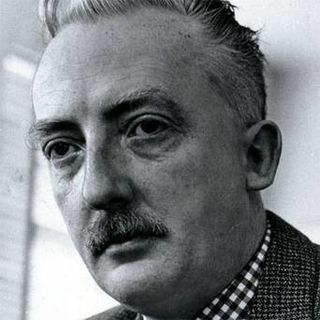
WVincent O'Brien, Irish organist, music teacher and composer. O'Brien was an important figure in early 20th-century Irish music. For some, he is mainly known as the first teacher of singers such as John McCormack, Margaret Burke-Sheridan and the writer James Joyce.
 W
WSeán Ó Riada, was an Irish composer and arranger of Irish traditional music. Through his incorporation of modern and traditional techniques he became the single most influential figure in the revival of Irish traditional music during the 1960s.
 W
WGeorge Alexander Osborne was an Irish composer and pianist.
 W
WGeoffrey Molyneux Palmer was an Irish composer, mainly of operas and vocal music, among them the first musical settings of poems by James Joyce.
 W
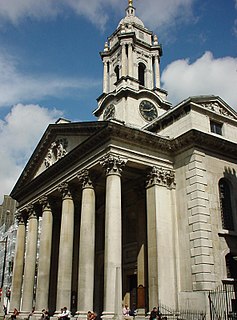
WDorothy Parke was a composer and music teacher from Northern Ireland, noted for children's works.
 W
WThomas Roseingrave, like his father Daniel Roseingrave, was an English-born Irish composer and organist.
 W
WNick Roth is an Irish / British saxophonist, composer, producer and educator.
 W
WSir Charles Villiers Stanford was an Irish composer, music teacher, and conductor of the late Romantic era. Born to a well-off and highly musical family in Dublin, Stanford was educated at the University of Cambridge before studying music in Leipzig and Berlin. He was instrumental in raising the status of the Cambridge University Musical Society, attracting international stars to perform with it.
 W
WSir John Andrew Stevenson was an Irish composer. He is best known for his piano arrangements of Irish Melodies with poet Thomas Moore. He was granted an honorary doctorate by the University of Dublin and was knighted in April 1802.
 W
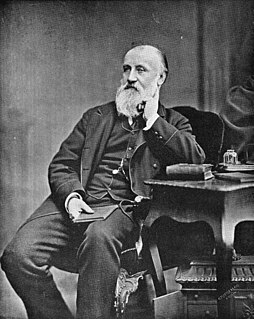
WSir Robert Prescott Stewart was an Irish composer, organist, conductor, and teacher – one of the most influential (classical) musicians in 19th-century Ireland.
 W
WHope Temple, born as Alice Maude Davis was an Irish songwriter and composer. She was also known as Mrs André Messager.
 W
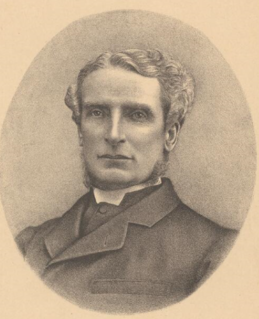
WGeorge William Torrance was an Irish composer, mainly of church music, who was resident in Australia for many years.
 W
WKevin Volans is a South African born Irish composer and pianist. He studied with Karlheinz Stockhausen and Mauricio Kagel in Cologne in the 1970s and later became associated with the Neue Einfacheit movement in the city. In the late 1970s he became interested in the indigenous music of his homeland and began a series of pieces which attempted to combine aspects of African and contemporary European music. Although Volans later moved away from any direct engagement with African music, certain residual elements such as interlocking rhythms, repetition and open forms are still detectable in his music since the early 1990s which takes a new direction more redolent of certain schools of abstract art. He settled in Ireland permanently in 1986 and was granted Irish citizenship in 1995.
 W
W(William) Vincent Wallace was an Irish composer and musician. In his day, he was famous on three continents as a double virtuoso on violin and piano. Nowadays, he is mainly remembered as an opera composer of note, with key works such as Maritana (1845) and Lurline (1847/60), but he also wrote a large amount of piano music that was much in vogue in the 19th century. His more modest output of songs and ballads, equally wide-ranging in style and difficulty, was also popular in his day, some numbers being associated with famous singers of the time.
 W
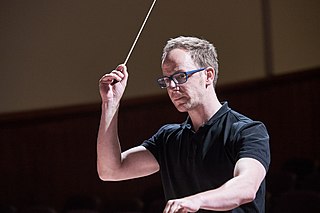
WGareth Patrick Williams is an Irish composer based at Edinburgh College of Art. He was the first composer in residence for Scottish Opera from 2012 to 2015. His work spans from opera and music theatre to chamber music.
 W
WCharles Wood was an Irish composer and teacher; his pupils included Ralph Vaughan Williams at Cambridge and Herbert Howells at the Royal College of Music. He is primarily remembered and performed as an Anglican church music composer, but he has also written some very fine songs and chamber music, particularly for string quartet.