 W
WJoaquim Teófilo Fernandes Braga was a Portuguese writer, playwright, politician and the leader of the Republican Provisional Government after the overthrow of King Manuel II, as well as the second elected President of the First Portuguese Republic, after the resignation of President Manuel de Arriaga.
 W
WJosé Francisco Correia da Serra was a Portuguese Abbot, polymath – philosopher, diplomat, politician and scientist. In some circumstances, he was also known as Abbé Correa. The plant genus Correa is named in his honour.
 W
WUriel da Costa, Uriel Acosta or d'Acosta was a Portuguese philosopher and skeptic who was born Christian, but converted to Judaism and ended up questioning the Catholic and rabbinic institutions of his time.
 W
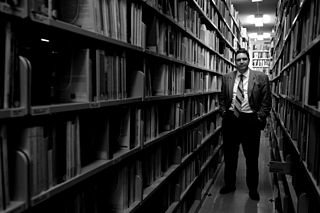
WManuel Curado is a Portuguese essayist and philosopher dedicated to Biomedical Ethics, Philosophy of Mind, and the History of Ideas. He has worked the following issues: the intellectual history of the idea of a universal language and the idea of machine translation, or automatic translation, the problem of human consciousness and its relationship with the brain, the relationship between science and religion, studies about the European and Portuguese intellectual history, academic editions of works by ancient authors, the history of Psychiatry and history of the Portuguese Jewish heritage in Medicine and Philosophy, and the history of literary representations of mental life.
 W
WPedro da Fonseca was a Portuguese Jesuit philosopher and theologian. His work on logic and metaphysics made him known in his time as the Portuguese Aristotle; he projected the 'Cursus Conimbricenses' realized by Manuel Góis and others.
 W
WDamião de Góis, born in Alenquer, Portugal, was an important Portuguese humanist philosopher. He was a friend and student of Erasmus. He was appointed secretary to the Portuguese factory in Antwerp in 1523 by King John III of Portugal. He compiled one of the first accounts on Ethiopian Christianity.
 W
WJaime de Magalhães Lima was a Portuguese philosopher, poet and writer.
 W
WEduardo Lourenço GCSE, GCIH was a Portuguese essayist, professor, critic, philosopher, and writer.
 W
WJosé Augusto Bragança de Miranda, born in Lisbon, 1953 is licentiate in sociology, with a Ph.D. in communication, is professor at the Communications Sciences Department of New University of Lisbon, lecturing in "Political Theory" and "Cultural Criticism."
 W
WDesidério Murcho is a Portuguese philosopher, professor, and writer.
 W
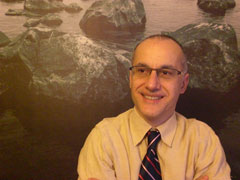
WAntónio Fernando de Vasconcelos Nogueira is a Portuguese philosopher, Social Science researcher, author, dramatist, and freelance journalist.
 W
WFernando António Nogueira Pessoa was a Portuguese poet, writer, literary critic, translator, publisher and philosopher, described as one of the most significant literary figures of the 20th century and one of the greatest poets in the Portuguese language. He also wrote in and translated from English and French.
 W
WFrancisco Sanches was a skeptic, philosopher and physician of Sephardi Jewish origin born in Portugal.
 W
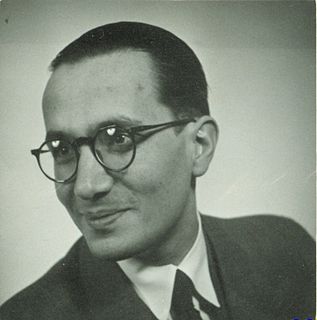
WDelfim Pinto dos Santos, was a Portuguese academic, philosopher, educationist, essayist and book and movie reviewer.
 W
WGeorge Agostinho Baptista da Silva, GCSE was a Portuguese philosopher, essayist, and writer. His thought combines elements of pantheism and millenarism, an ethic of renunciation, and a belief in freedom as the most important feature of man. Anti-dogmatic, he asserts that truth is only found in the sum of all conflicting hypothesis. He may be considered a practical philosopher, living and working for a change in society, according to his beliefs.
 W
WLuis Filipe de Bragança e Sousa da Silva Teixeira is a Portuguese essayist and university teacher.
 W
WFather António Vieira was a Jesuit priest, Portuguese diplomat, orator, preacher, philosopher, writer, and member of the Royal Council to the King of Portugal.