 W
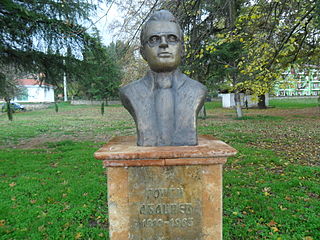
WGjorgji Abadžiev was a Macedonian prosaist and publicist. From 1915 to 1948 he lived in Bulgaria where he studied at the Faculty of Law in Sofia (1932-1937). Later he moved to SR Macedonia where he became a historian and writer. Abadžiev died on August 2, 1963 in Skopje. He published his works in Bulgarian, Macedonian and Serbian.
 W
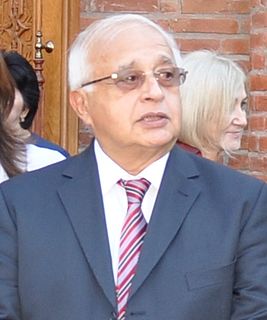
WElchin Ilyas oglu Afandiyev is an Azerbaijani writer, professor and politician who served as Deputy Prime Minister of Azerbaijan from 1993 to 2018.
 W
WIlyas Mahammad oglu Afandiyev was an Azerbaijani and Soviet writer, member of Azerbaijan Union of Writers (1940), Honored Art Worker of Azerbaijan (1960), laureate of the State Prize of Azerbaijan (1972) and People’s Writer of Azerbaijan (1979).
 W
WSuleyman Sani Akhundov, was an Azerbaijani playwright, journalist, author, and teacher. He chose the name Sani to avoid confusion with his namesake, Mirza Fatali Akhundov.
 W
WVugar Aslanov was born in Goranboy, Azerbaijan. He is a writer and journalist from Azerbaijan. In college he studied literature. By the 1990s he was working in Baku for various newspapers. He and the information agency Səmt (Drift) founded the newspaper, Kompas, which he ran from 1995 to 1998. During that time he edited a book of short stories and also wrote short stories. Many of his stories were published by the writers union of Azerbaijan in its literary magazines. He emigrated from Azerbaijanin in 1998 to Germany. In Germany he was able to continue his journalistic and literary work. He lectured and wrote about the various republics in the former Soviet Union. In 2007 he wrote a book in German called The Cotton Fields. The Cotton Fields is a volume of seven of his short stories on aspects of life; for example, in one story his protagonist is a hospital's very tired accountant.
 W
WJozef Banáš is a prominent Slovak novelist, journalist, diplomat and politician.
 W
WJan Barszczewski was a Polish-Lithuanian writer, poet and editor. He wrote both in Ruthenian and Polish languages.
 W
WEqrem Basha is among the most respected contemporary writers of Kosovo in recent years. His life and literary production are intimately linked to Kosovo and its capital Pristina, where he has lived and worked since the 1970s.
 W
WJanka (Yanka) Bryl was a Belarusian writer best known for his short stories. He was one of the older generation of Soviet writers who had begun their literary careers in Stalin's time but received a new lease on life in the late 1950s along with such contemporaries as Ivan Shamiakin and Ivan Melezh.
 W
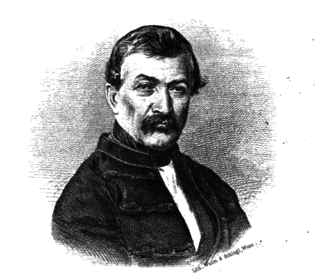
WSamo Chalupka was a Slovak romantic poet.
 W
WDobroslav Chrobák was a Czechoslovak writer.
 W
WLidija Dimkovska is a Macedonian poet, novelist and translator. She was born in Skopje and studied comparative literature at the University of Skopje. She proceeded to obtain a PhD in Romanian literature at the University of Bucharest. She has taught at the University of Bucharest and the University of Nova Gorica in Slovenia. She now lives in Ljubljana, working as a freelance writer and translator of Romanian and Slovenian literature.
 W
WPavol Dobšinský was a Slovak collector of folklore and writer belonging to the period of Romanticism and the Štúr generation. He is perhaps best known for creating the largest and most complete collection of Slovak folktales, Prostonárodnie slovenské povesti, self-published in a series of eight books from 1880 to 1883.
 W
WTiberius Claudius Donatus was a Roman Latin grammarian of the late 4th and early 5th century AD of whom a single work is known, the Interpretationes Vergilianae, a commentary on Virgil's Aeneid. His work, rediscovered in 1438, proved popular in the early modern age; 55 editions of this book were printed between 1488 and 1599.
 W
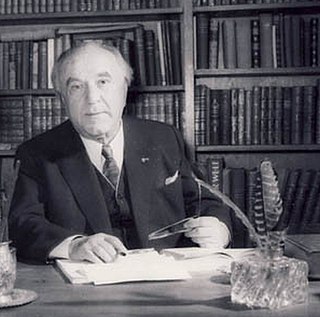
WVictor Eftimiu was a Romanian poet and playwright. He was a contributor to Sburătorul, a Romanian literary magazine. His works have been performed in the State Jewish Theater of Romania.
 W
WMargita Figuli was a Slovak prose writer, translator and author of literature for children and young people.
 W
WTaki Fiti is an economist and former Minister of Finance of North Macedonia.
 W
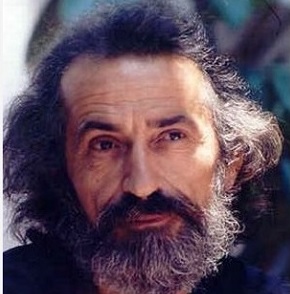
WJusuf Gërvalla was a Kosovo Albanian activist, writer, musician, and the founder of the Marxist-Leninist group National Movement for the Liberation of Kosovo. Born in the village Burremëdhi (Dubovik), in the municipality of Pejë in Kosovo, Gërvalla pursued a college education in Prishtina and Ljubljana before working as a journalist in Skopje and Prishtina. A vocal nationalist, he came under the radar of Yugoslav secret service, prompting him to seek asylum in Germany in 1980 where he subsequently established the Popular Movement for the Republic of Kosovo, which later split into the two factions the People's Movement of Kosovo and the National Movement for the Liberation of Kosovo, the former being the forerunners of the, at the time, ideologically heterogeneous Kosovo Liberation Army. While abroad, he also made efforts to unite Albanian movements and political parties. On January 17, 1982, Gërvalla along with his brother Bardhosh Gërvalla, and fellow activist Kadri Zeka, were assassinated in Stuttgart, allegedly by Yugoslav secret service. His murder caused outrage among Albanians and abroad, and led to an increased intensity in Albanian nationalism and hostility to Yugoslav control of Kosovo.
 W
WNdoc Gjetja was an Albanian poet.
 W
WJozef Gregor, better known as Jozef Gregor-Tajovský was a Slovak prose and drama author, poet, teacher and politician.
 W
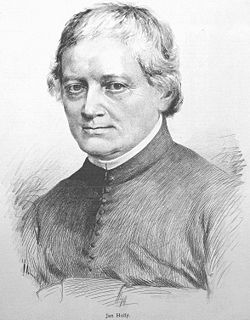
WJán Hollý was a Slovak poet and translator. He was the first greater Slovak poet to write exclusively in the newly standardized literary Slovak language. His predecessors mostly wrote in various regional versions of Czech, Slovakized Czech or Latin. Hollý translated Virgil's Aeneid and wrote his own epic poetry in alexandrine verse to show that the Slovak language recently standardized by Anton Bernolák was capable of expressing complex poetic forms.
 W
WPavol Hudák was a Slovak poet, journalist and publicist.
 W
WJozef Miloslav Hurban, pseudonyms Slavomil F. Kořennatý, Ľudovít Pavlovič, M. z Bohuslavíc, M. Selovský, was a leader of the Slovak National Council and the Slovak Uprising in 1848/1849, a Slovak writer, journalist, politician, organizer of Slovak cultural life and a Protestant priest. He first supported Ján Kollár, but later turned to Ľudovít Štúr. His son Svetozár Hurban-Vajanský followed his father's footsteps both as a writer and nationalist.
 W
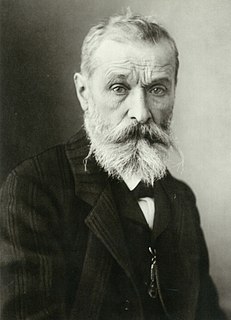
WSvetozár Miloslav Hurban, pen name Svetozár Hurban-Vajanský was a Slovak poet, lawyer and nationalist newspaper editor who was twice imprisoned. Born in Hlboké, he was the son of Jozef Miloslav Hurban.
 W
WElmar Sabir oglu Huseynov was an independent Azerbaijani journalist, widely known for his harsh criticism of Azerbaijani authorities, especially incumbent president Ilham Aliyev and his father and predecessor Heydar Aliyev. He was murdered in March 2005 and it's believed that his murder was in fact ordered by government officials.
 W
WMirza Ibrahimov, Azerbaijani writer, playwright, state and public figure.
 W
WAlex 'Lex' Jacoby was a Luxembourgian writer. He wrote novels, poems, plays and newspaper articles. He was born in Junglinster. His early works were written in the French language, Later Jacoby dedicated himself to writing exclusively in German. Before pursuing writing full-time, Jacoby was a teacher in Clervaux.
 W
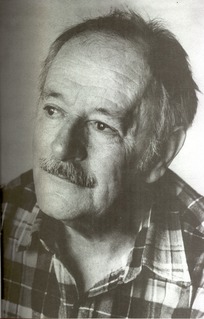
WSlavko Janevski was a Macedonian poet, prose and script writer. He was also active as a comics artist. He finished high school in Skopje. From 1945 onwards he was the editor of the first teenage magazine called "Pioneer". Janevski is the author of the first novel to be written in Macedonian language "Seloto zad sedumte jaseni". As script writer he adapted the historical drama "Macedonian bloody wedding" in 1967. Janevski received many awards, among others "AVNOJ" 1968 and "Makedonsko slovo" for the book "Thought".
 W
WJānis Jaunsudrabiņš was a Latvian writer and painter and one of the most popular authors of the first Republic of Latvia between the two world wars.
 W
WBaron Ján Jesenský was a Slovak lower nobleman of the House of Jeszenszky, poet, prose writer, translator, and politician. He was a prominent member of the Slovak national movement.
 W
WDarinka Jevrić was a Kosovo Serb poet.
 W
WVeli Karahoda is an Albanian writer, poet, novelist and essayist. He studied at the University of Pristina, Faculty of Arts.
 W
WAnna Lacková-Zora was a Slovak author. She published under the pseudonyms of Zora-Lacková, aunt Zora, Zora and Lacková-Zora. At first she worked as a bank clerk, but then fully devoted herself to her literature work, which she began during World War I.
 W
WElena Maróthy-Šoltésová was a Slovak writer and editor. She was also a leading figure in the women's movement in Slovakia.
 W
WDoreen Micallef was a Maltese poet and playwright. She has been cited as an example of Malta's post World War II emergence of female authors and poets. Micallef's work has also been noted for introducing poetry into Maltese plays. In 2011, Micallef's home in Valletta was restored by the Maltese Academy, an organization that promotes the use of the Maltese language in Malta. Upon the completion of the restoration, the home became the organization's headquarters.
 W
WGustáv Murín (1959) is a Slovak author and journalist. He has written critically on corruption in Slovak politics. His Small World was published in France as Le monde est petit. He was president of the PEN centre of Slovakia 2000 – 2004, 2009 – 2011.
 W
WMir-Mohsun Navvab occupies a prominent place in the history of Azerbaijani culture as the last representative of old traditional school of science, arts and literature. Navvab was versatile person of his time. He is known as a poet, artist, music historian, astronomer, carpenter, chemist and mathematician.
 W
WMile Nedelkoski was a Macedonian poet, novelist, storyteller, and playwright. In North Macedonia, he had a reputation for being a bulgarophile intellectual.
 W
WErlendur Patursson was a Faroese politician and writer.
 W
WSverri Patursson (1871–1960) was a Faroese writer, author, and journalist. He was also a translator, ornithologist and environmentalist.
 W
WAnker Eli Petersen is a Faroese writer and artist.
 W
WMartin Rázus was a Slovak poet, dramatist, writer, politician and Lutheran priest
 W
WMichel Rodange was a Luxembourgish writer and poet, best known for writing Luxembourg's national epic, Renert [full original title: Renert oder de Fuuß am Frack an a Ma'nsgrëßt].
 W
WVladimír Roy was a Slovak poet, translator and opera librettist.
 W
WRasul Rza, , was an Azerbaijani writer, Hero of Socialist Labour (1980), People's Poet of Azerbaijan, Laureate of Soviet State Award and the Chairman of the Writers' Union of Azerbaijan. He was the husband of Azerbaijani writer Nigar Rafibeyli and the father of writer Anar Rzayev.
 W
WAlbert Salvadó i Miras is an Andorran writer and industrial engineer. He writes in both Catalan and Spanish.
 W
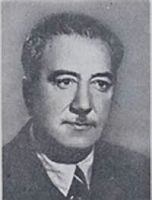
WIsak Samokovlija was a prominent Bosnian Jewish writer. By profession he was a physician. His stories describe the life of the Bosnian Sephardic Jews.
 W
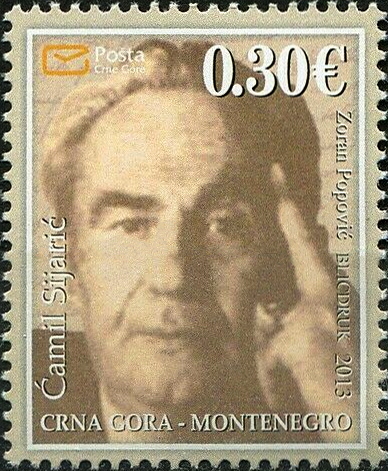
WĆamil Sijarić was a Bosniak novelist and short story writer. He enrolled in law school in 1936 and earned his degree four years later. Sijarić died in a car crash at the age of 75.
 W
WDerviš Sušić was a Bosnian writer, known best for his first work I, Danilo.
 W
WMiroslav Válek was a Slovak poet, publicist and politician. He was also the Minister of Culture in the government of Slovak Socialistic Republic within the Czechoslovak Socialist Republic.
 W
WNajaf bey Fatali oglu Vazirov was an Azerbaijani playwright and journalist.
 W
WLudwika Savitskaya (1892–1991), using the pen-name Zoska Veras, was a Belarusian writer.
 W
WČedo Vuković was a Montenegrin writer.
 W
WNikolaus “Nik” Welter was a Luxembourgish writer, playwright, poet, professor, literary critic, and statesman. He wrote predominantly in German. He also served as a Minister for Education in the government of Émile Reuter.
 W
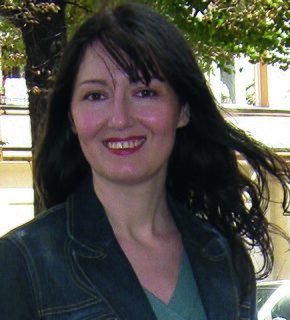
WAnila Wilms is an Albanian writer living in Germany.
 W
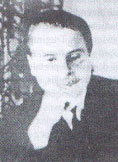
WJakov Xoxa was an Albanian writer of the 20th century.
 W
WZelimkhan Yaqub was an Azerbaijani poet. He served as a deputy of the National Assembly of Azerbaijan from 1995 to 2005. He was also named the national poet of Azerbaijan in 2005. He was born in Bolnisi Municipality, Georgian SSR, Soviet Union.
 W
WJonáš Záborský was a Slovak lower nobleman and writer. He was an author of tales, epigrams, allegorical-philosophical poems, satirical poems, historical dramas, comedies and stories.
 W
WAndrej Žarnov, born František Šubík, was a Slovak Catholic modernist writer and physician.
 W
WZuzka Zguriška, born as Ľudmila Šimonovičová, married Dvořáková, was a Slovak novelist, play-writer and translator, and occasional actress. Zguriška is a belated representative of classical Slovak Realism.