 W
WThe Abbaye Blanche was a nunnery founded in 1112 in Mortain, France.
 W
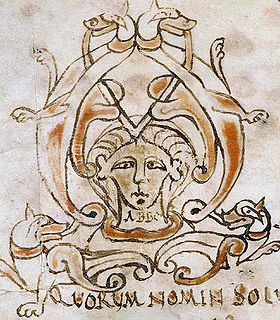
WAbbo or Abbon of Fleury, also known as Saint Abbo or Abbon, was a monk and abbot of Fleury Abbey in present-day Saint-Benoît-sur-Loire near Orléans, France.
 W
WAdela of Normandy, of Blois, or of England, also known as Saint Adela in Roman Catholicism, was a daughter of William the Conqueror and Matilda of Flanders who later became the Countess of Blois, Chartres, and Meaux by marriage to Stephen II, Count of Blois. Her husband greatly benefited from the increased social status and prestige that came with such a marriage. She brought with her not only her bloodline, but a wedding gift of money and other movable goods from the prodigious store of Anglo-Norman wealth. She was regent of Blois during the absence of her spouse in 1096–1100 and 1101–02, and during the minority of her son from 1102 until 1120.
 W
WAlberic of Cîteaux, sometimes known as Aubrey of Cîteaux, was a French monk and abbot, one of the founders of the Cistercian Order. He is now honored as a saint.
 W
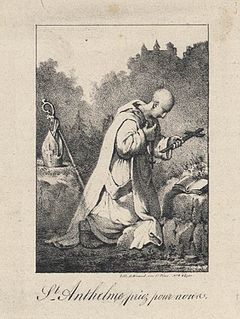
WAnthelm of Belley (1107–1178) was a prior of the Carthusian Grand Chartreuse and bishop of Belley.
 W
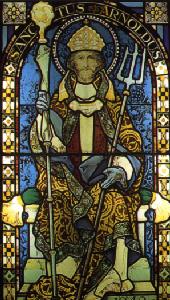
WArnold (Arnoul) of Soissons or Arnold or Arnulf of Oudenburg is a saint of the Catholic Church, the patron saint of hop-pickers, Belgian brewers. In some of the medieval French Fabliaux, some of which ridiculed Catholicism, this saint was called the patron saint of the cuckolded husbands.
 W
WBénézet, is a saint of the Catholic Church. Christian tradition states that he was a shepherd boy who saw a vision during an eclipse in 1177 which led him to build a bridge over the Rhône River at Avignon.
 W
WBernard of Clairvaux, venerated as Saint Bernard, was a Burgundian abbot, and a major leader in the revitalization of Benedictine monasticism through the nascent Order of Cistercians.
 W
WSaint Bernard of Montjoux was an Italian canon regular and founder of the Great St Bernard Hospice, and its associated Canons Regular of the Hospitaller Congregation of Great Saint Bernard.
 W
WColette of Corbie, P.C.C., was a French abbess and the foundress of the Colettine Poor Clares, a reform branch of the Order of Saint Clare, better known as the Poor Clares. She is honored as a saint in the Catholic Church. Due to a number of miraculous events claimed during her life, she is venerated as the patron saint of women seeking to conceive, expectant mothers, and sick children.
 W
WSaint Drogo of Sebourg (March 14, 1105– April 16, 1186), also known as Dreux, Drugo, and Druron, is a Flemish saint. He was born in Epinoy, Flanders, and died in Sebourg, France. His feast day is on April 16.
 W
WElzéar of Sabran, T.O.S.F., Baron of Ansouis, Count of Ariano, was born in the castle of Saint-Jean-de-Robians, near Cabrières-d'Aigues in Provence, southern France, in 1285. He died in Paris, France, on September 27, 1323. He was a tertiary of the Franciscan Order as well as a ruler, diplomat and military leader. He was recognised as a saint in the Catholic Church.
 W
WSaint Felix of Valois was a Cistercian hermit and a co-founder of the Trinitarian Order.
 W
WWilliam Firmatus was a Norman hermit and pilgrim of the eleventh century, now venerated as a saint in the Catholic Church.
 W
WSaint Fulcran was a French saint. He was bishop of Lodève.
 W
WGodfrey of Amiens (1066–1115) was a bishop of Amiens. He is a saint in the Catholic Church.
 W
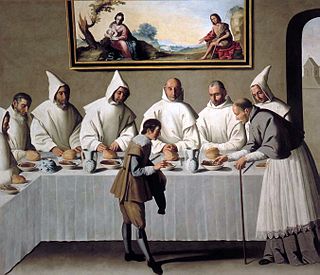
WSaint Hugh of Châteauneuf was the Bishop of Grenoble from 1080 to his death. He was a partisan of the Gregorian reform and opposed to the Archbishop of Vienne, later Pope Callixtus II.
 W
WHugh, sometimes called Hugh the Great or Hugh of Semur, was the Abbot of Cluny from 1049 until his death. He was one of the most influential leaders of the monastic orders from the Middle Ages.
 W
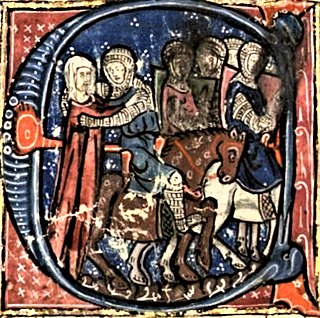
WIda of Lorraine was a saint and noblewoman.
 W
WIsabelle of France was a French princess, the daughter of Louis VIII of France and Blanche of Castile. She was a younger sister of King Louis IX of France and of Alfonso, Count of Poitiers, and an older sister of King Charles I of Sicily. In 1256, she founded the nunnery of Longchamp in part of the Forest of Rouvray, west of Paris. Isabelle consecrated her virginity and her entire life to God alone. She is honored as a saint by the Franciscan Order. Her feast day is 22 February.
 W
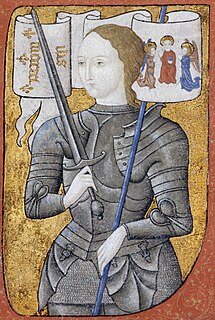
WJoan of Arc, nicknamed "The Maid of Orléans", is considered a heroine of France for her role during the Lancastrian phase of the Hundred Years' War, and was canonized as a Catholic saint. She was born to Jacques d'Arc and Isabelle Romée, a peasant family, at Domrémy in the Vosges of northeast France. Joan claimed to have received visions of the archangel Michael, Saint Margaret, and Saint Catherine of Alexandria instructing her to support Charles VII and recover France from English domination late in the Hundred Years' War. The as-yet-unanointed King Charles VII sent Joan to the Siege of Orléans as part of a relief army. She gained prominence after the siege was lifted only nine days later. Several additional swift victories led to Charles VII's consecration at Reims. This long-awaited event boosted French morale and paved the way for the final French victory at Castillon in 1453.
 W
WSaint John of Matha (1160–1213) was a Christian saint of the 12th century and founder of the Order of the Most Holy Trinity, dedicated to ransoming captive Christians.
 W
WSaint Lietbertus of Brakel was bishop of Cambrai from 31 March 1051 to 28 September 1076. Liebertus was born to the Brabantian nobility at Opbrakel. He served as archdeacon and provost of the cathedral of Cambrai before his election as bishop.
 W
WLouis of Toulouse was a Neapolitan prince of the Capetian House of Anjou and a Catholic bishop.
 W
WSaint Peter Nolasco, Pere Nolasc in Catalan, Pierre Nolasque in French and Pedro Nolasco in Spanish, is a Catholic saint, born at Mas-des-Saintes-Puelles, Languedoc, today's France, although some historians claim he was born in Barcelona.
 W
WSaint Odilo of Cluny was the fifth Benedictine Abbot of Cluny, holding the post for around 54 years. During his tenure Cluny became the most important monastery in western Europe. Odilo actively worked to reform the monastic practices not only at Cluny, but at other Benedictine houses. He also promoted the Truce of God whereby military hostilities were temporarily suspended at certain times for ostensibly religious reasons. Odilo encouraged the formal practice of personal consecration to Mary. He established All Souls' Day in Cluny and its monasteries as the annual commemoration to pray for all the faithful departed. The practice was soon adopted throughout the whole Western church.
 W
WOsmund, Count of Sées, was a Norman noble and clergyman. Following the Norman conquest of England, he served as Lord Chancellor and as the second bishop of Salisbury, or Old Sarum.
 W
WRaoul, founder of Vaucelles Abbey or Saint Raoul (+1152) is a saint of the Catholic Church who founded the famous monastery of Vaucelles in France. Raoul was an English Benedictine monk who became a follower of St. Bernard of Clairvaux.
 W
WRobert of Molesme was an abbot, one of the founders of the Cistercian Order and is honored as a Christian saint.
 W
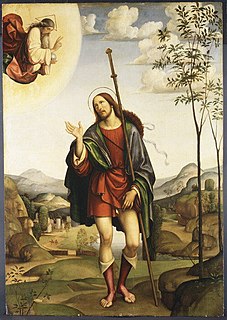
WSaint Roch or Rocco (lived c. 1348 – 15/16 August 1376/79 was a Catholic saint, a confessor whose death is commemorated on 16 August and 9 September in Italy; he is specially invoked against the plague. He may also be called Rock in English, and has the designation of St Rollox in Glasgow, Scotland, said to be a corruption of St Roch's Loch, which referred to a small loch once near a chapel dedicated to St. Roch in 1506.
 W
WSolange was a Frankish shepherdess and a locally venerated Christian saint and cephalophore, whose cult is restricted to Sainte-Solange, Cher. Saint Solange was the patron of the traditional Province of Berry, of which Cher is a part.
 W
WSaint Stephen of Muret was the founder of the Abbey of Grandmont and the Order of Grandmont.
 W
WTheobald of Provins, O.S.B. Cam. (1033–1066) was a French hermit and saint. He was born at Provins to the French nobility, his father being Arnoul, Count of Champagne. He was named after his uncle, Theobald of Vienne, also considered a saint.
 W
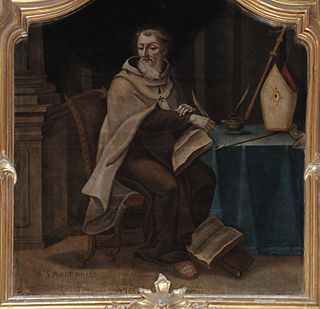
WSaint Peter Thomas (1305-1366) {Petrus de Thomas) was a Carmelite friar and is recognized as a saint by the Roman Catholic Church.
 W
WRobert de Turlande was a French Roman Catholic priest and professed member of the Order of Saint Benedict. He was of noble stock and was also related to Saint Gerald of Aurillac. He is best known for the establishment of the Benedictine convent of La Chaise-Dieu and for his total commitment to the poor.
 W
WSaint Walter of Pontoise was a French saint of the eleventh century. Born at Andainville, he was a professor of philosophy and rhetoric before becoming a Benedictine monk at Rebais. A story told of him is that while a novice, Walter took pity on an inmate at the monastery prison, and helped the prisoner to escape.
 W
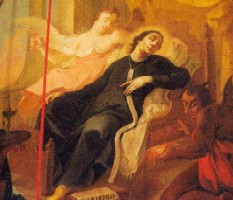
WSaint William of Æbelholt was a French-born churchman of Denmark.
 W
WWilliam of Gellone, the medieval William of Orange, was the second Duke of Toulouse from 790 until 811. In 804, he founded the abbey of Gellone. He was canonized a saint in 1066 by Pope Alexander II.
 W
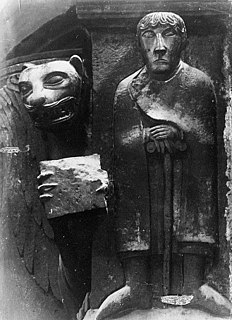
WSaint William of Volpiano was an Italian monastic reformer, composer and founding abbot of numerous abbeys in Burgundy, Italy and Normandy.