 W
WYevgeny Grigorievich Brusilovsky was a Soviet and Russian composer who settled in Kazakhstan. He wrote the first Kazakh opera, co-wrote the music for the Anthem of the Kazakh Soviet Socialist Republic, and was a People's Artist of the Kazakh SSR.
 W
WSemyon Mikhailovich Budyonny was a Russian cavalryman, military commander during the Russian Civil War, Polish-Soviet War and World War II, and a close political ally of Soviet leader Joseph Stalin.
 W
WColonel General Nikandr Evlampievich Chibisov was a Soviet military commander and Hero of the Soviet Union (1943).
 W
WNikolay Nikanorovich Dubovskoy was a Russian landscape painter, associated with the Peredvizhniki. Together with Isaac Levitan, he helped create what came to be known as the "Landscape of Mood".
 W
WEmmanuil Noevich Yevzerikhin was a Soviet photographer.
 W
WYakov Il'ich Frenkel was a Soviet physicist renowned for his works in the field of condensed matter physics. He is also known as Jacov Frenkel, and he frequently put down his name as J. Frenkel when he published his papers in journals in English.
 W
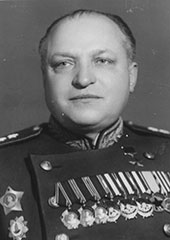
WKuzma Nikitovich Galitsky was a Soviet army general who earned the title Hero of the Soviet Union.
 W
WGeorge VI of Armenia was the Catholicos of the Armenian Apostolic Church from 1945 to 1954.
 W
WMetropolitan Germogen, secular name Georgy Ivanovich Maximov, was bishop of Aksay, Vicar of the Don Diocese, 23rd Bishop of Yekaterinoslav and Novomoskovsk, Governor of the Russian Orthodox municipalities on Crete and North Africa with a seat in Athens (1922), Archbishop of Yekaterinoslav and Novomoskovsk (1922–1942), member of the Synod of Bishops of the Russian Orthodox Church Abroad (1924–1942), the head of the Croatian Orthodox Church (1942–1945).
 W
WElena Fabianovna Gnesina was a Russian composer and music educator, a sister of the composer Mikhail Gnesin.
 W
WNina Timofeevna Gnilitskaya was a soldier and reconnaissance scout in the 465th Separate Motorized Rifle Reconnaissance Company of the 383rd Rifle Division in the 18th Army on the Southern Front during World War II. After fighting to death in a gunfight against German soldiers when they discovered her hiding place she became the only woman reconnaissance scout in the Red Army to be awarded the title Hero of the Soviet Union after the Supreme Soviet posthumously awarded her the title on 31 March 1943.
 W
WIvan Karpovich Golubets was a Soviet sailor with the Black Sea Fleet. He was posthumously made a Hero of the Soviet Union.
 W
WOka Ivanovich Gorodovikov was a Kalmyk Red Army cavalry general.
 W
WSergey Ilyich Gorshkov was a Red Army lieutenant general who held division and corps command during World War II.
 W
WNikolay Ivanovich Goryushkin was the commander of the 22rd Guards Motor Rifle Brigade of the Red Army during World War II; he was twice awarded the title Hero of the Soviet Union for his actions in the war.
 W
WAndrei Antonovich Grechko was a Soviet general, Marshal of the Soviet Union and Minister of Defense.
 W
WAleksei Maximovich Kaledin was a Don Cossack Cavalry General who led the Don Cossack White movement in the opening stages of the Russian Civil War.
 W
WVasily Akimovich Kharlamov was a Russian politician involved in the revolution and civil war.
 W
WAndrey Konstantinovich Korsakov was an eminent Russian and Ukrainian linguist and language philosopher who specialised in the grammar of the English language and is considered a father of Grammar School in Ukraine. Having organised the Chair of English Grammar at Odessa National Mechnikov University in 1963, he was at the head of it for the following 30 years. Within this period, as a scientific adviser, Korsakov supervised over 30 candidate theses, thus influencing the linguistic minds throughout the USSR. Professor Korsakov was one of the first to give philosophic interpretation of grammatical phenomena. The basis of his linguistic school makes up philosophic understanding conceivable reality as an interconnected system of things, their qualities and relations.
 W
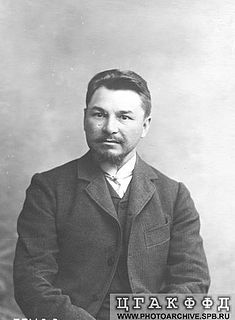
WNikolay Ivanovich Krasnov was a major-general of the Imperial Russian Army.
 W
WFyodor Dmitrievich Kryukov was a Cossack writer and soldier in the White Army, died in 1920 of typhoid fever. Various literary critics, most notably Aleksandr Solzhenitsyn and Roy Medvedev, claimed that Mikhail Sholokov plagiarised his work in order to write major parts of And Quiet Flows the Don. This was also the conclusion of a statistical analysis by V. P. and T. G. Fomenko. Their conclusion has been questioned by a more recent analysis. Ze'ev Bar-Sela believes that although the book was plagiarised, it was plagiarised from Venyamin Alekseevich Krasnushkin, and not from Kryukov. A 1984 monograph by Geir Kjetsaa and others concluded through statistical analyses that Sholokhov was the likely author of Don.
 W
WPavel Stepanovich Kutakhov was a flying ace during World War II who went on to become Commander-in-Chief of the Soviet Air Forces between 1969 and 1984. During his career he held a variety of commands and visited several countries receiving Soviet military aid.
 W
WViktor Yakovlevich Litvinov was a Soviet Russian aircraft designer and organizer of the aircraft industry.
 W
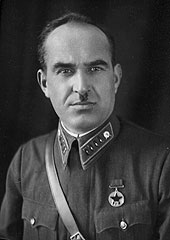
WIvan Ilyich Lyudnikov, was a Soviet Army Colonel General and Hero of the Soviet Union.
 W
WMikhail Mikhailovich Meshcheryakov was a Red Army major general and Hero of the Soviet Union.
 W
WD. Moor was the professional name of Dmitry Stakhievich Orlov, a Russian artist noted for his propaganda posters. The pseudonym "Moor" was taken from the name of the protagonists in Friedrich Schiller's play The Robbers.
 W
WIvan Konstantinovich Morozov was a major general of the Red Army during the Second World War.
 W
WSemyon Grigoryevich Morozov was commissar of the Taganrog antifascist underground organization (1941–1943). He was posthumously awarded the Hero of the Soviet Union title.
 W
WNikolay Ivanovich Muralov was a Bolshevik revolutionary leader in Russia, who after 1923 became a member of the Left Opposition.
 W
WIvan Vasilʹevich Mushketov was a famous Russian geologist, tectonist, explorer, and geographer.
 W
WAlexander Miasnikian, Myasnikyan or Myasnikov was an Armenian Bolshevik revolutionary and official. Miasnikian's revolutionary nom de guerre was Martuni.
 W
WAndrey Grigoryevich Nikitin was a Red Army major general.
 W
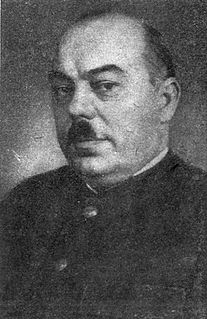
WValentin Vladimirovich Ovechkin was a Soviet writer, playwright, and journalist.
 W
WNikolay Ivanovich Pakhomov was a Soviet politician and government official.
 W
WVladimir Mikhailovich Petlyakov was a Soviet aeronautical engineer.
 W
WMarkian Mikhaylovich Popov was a Soviet military commander, Army General, and Hero of the Soviet Union (1965).
 W
WFaina Georgievna Ranevskaya, is recognized as one of the greatest Soviet actresses in both tragedy and comedy. She was also famous for her aphorisms.
 W
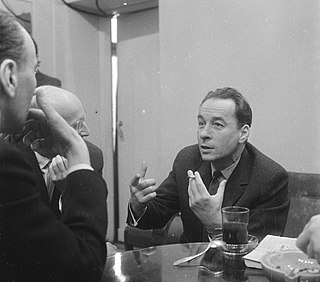
WWitold Rowicki was a Polish conductor. He held principal conducting positions with the Warsaw Philharmonic Orchestra and the Bamberg Symphony Orchestra.
 W
WDmitry Ivanovich Ryabyshev Russian: Дми́трий Ива́нович Ря́бышев,, was a Soviet military commander, commander of 8th Mechanized Corps (1941).
 W
WFyodor Ivanovich Samokhin was a Soviet-Russian novelist, member of the Union of writers of the USSR. One of the representatives of "village" and "lieutenant" prose.
 W
WMikhail Aleksandrovich Sholokhov was a Soviet-Russian novelist and winner of the 1965 Nobel Prize in Literature. He is known for writing about life and fate of Don Cossacks during the Russian Revolution, the civil war and the period of collectivization, primarily in his most famous novel, And Quiet Flows the Don.
 W
WVladimir Ilyich Sidorin was an officer in the Russian Imperial Army and Commander of the Don Army between February 1919 and April 1920 during the Russian Civil War.
 W
WMikhail Stepanovich Svechnikov was a Russian military officer in the Imperial Russian Army and the Red Army. He is best known as one the military leaders of the Red Guards in the 1918 Finnish Civil War.
 W
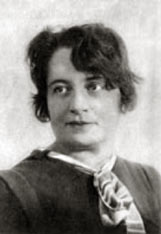
WYelizaveta Yakovlevna Tarakhovskaya was a Russian poet, playwright, translator, and author of children's books.
 W
WNikolai Efimovich Timkov was a Soviet Russian painter, Honored Artist of Russian Federation, and a member of the Saint Petersburg Union of Artists. He lived and worked in Leningrad and is regarded as one of the leading representatives of the Leningrad School of Painting, worldwide known for his landscape paintings.
 W
WSergei Michailovich Trufanov was a lapsed hieromonk, a charismatic preacher, an enfant terrible of the Russian Orthodox church, panslavist, and actor.
 W
WArmenak "Aram" Yaltyryan was a Soviet lightweight wrestler. He won a silver medal at the 1947 European Championships and placed fourth at the 1952 Summer Olympics.
 W
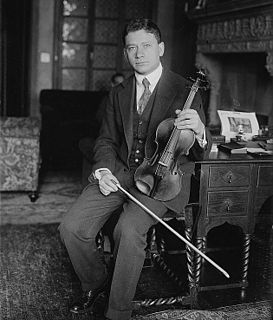
WEfrem Zimbalist Sr. was a concert violinist, composer, teacher, conductor and director of the Curtis Institute of Music.