 W
WForeign enlistment in the American Civil War largely favored the Union, which was far more successful in attracting international volunteers. Nonetheless, thousands of immigrants and mercenaries served with the Confederacy.
 W
WCharles Francis Buck was a U.S. Representative from Louisiana.
 W
WPrince Camille Armand Jules Marie de Polignac was a French nobleman who served with the Confederates in the American Civil War, living on to become the last surviving Confederate major-general.
 W
WThe Chalmette Regiment, Louisiana State Militia (CSA) was a Louisiana militia regiment that consisted of foreign volunteers. The Regiment was called into Confederate service for 90 days March 1, 1862. Mustered out in May 1862, the regiment was again called into service in May 1863 to defend Fort Beauregard.
 W
WRaleigh Edward Colston was a French-born American professor, soldier, cartographer, and writer. He was a controversial brigadier general in the Confederate States Army during the American Civil War. Colston was among a handful of former Confederates who served in Egypt following the war.
 W
WMax Corput, fully documented as Maximilien van den Corput was a Belgian-American architect. He designed the second Union Station of Atlanta, Georgia. Van den Corput also served as an officer in the Confederate States Army during the American Civil War.
 W
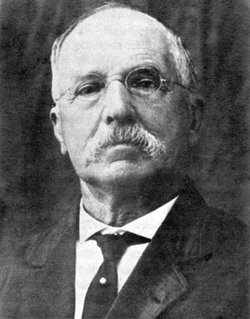
WColonel Henry Wemyss Feilden, CB was a British Army officer, Arctic explorer and naturalist.
 W
WMax Frauenthal was a leading merchant in post-bellum Arkansas, and was a founding father of Conway, Arkansas, Heber Springs, Arkansas, and Cleburne County, Arkansas. He is known for the courage he showed during the Battle of Spotsylvania Court House in the American Civil War.
 W
WEmil Ganz was a businessman and two-time mayor of Phoenix, Arizona.
 W
WAdolphus Heiman was a Prussian-born American architect and soldier; later becoming a Confederate officer during the American Civil War.
 W
WCharles Frederick Henningsen was a writer, mercenary, filibuster, and munitions expert. He participated in civil wars and independence movements in Spain, Nicaragua, Hungary, and the United States.
 W
WFrancis Xavier Leray was an American prelate of the Roman Catholic Church who served as Bishop of Natchitoches (1877–1879) and Archbishop of New Orleans (1883–1887).
 W
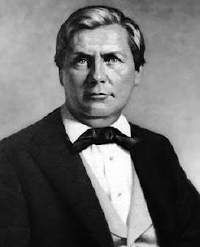
WCharles Linn born Carl Erik Engelbert Sjödahl was a sailor, wholesaler, banker and industrialist. He was a captain in the Confederate Navy and an important figure in Alabama's early economy.
 W
WPeter Alexander Selkirk McGlashan was a Confederate officer during the American Civil War. Promoted to the rank of brigadier in April 1865, he was the last appointed general of the Confederacy.
 W
WSamuel Pasco was an American politician who served as a U.S. Senator from Florida.
 W
WAdolph Proskauer was a Jewish officer in the army of the Confederate States of America during the United States Civil War. He rose to the rank of major. Major Adolph Proskauer of Mobile, Alabama was wounded several times. A subordinate officer wrote "I can see him now as he nobly carried himself at Gettysburg, standing coolly and calmly with a cigar in his mouth at the head of the 12th Alabama amid a perfect rain of bullets, shot and shell. He was the personification of intrepid gallantry and imperturbable courage.
 W
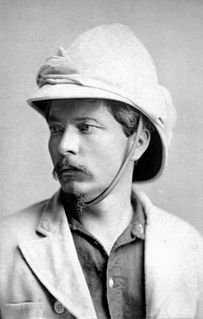
WSir Henry Morton Stanley was a Welsh-American journalist, explorer, soldier, colonial administrator, author and politician who was famous for his exploration of central Africa and his search for missionary and explorer David Livingstone, whom he later claimed to have greeted with the now-famous line: "Dr Livingstone, I presume?". He is mainly known for his search for the source of the Nile, work he undertook as an agent of King Leopold II of Belgium, which enabled the occupation of the Congo Basin region, and for his command of the Emin Pasha Relief Expedition. He was knighted in 1899.
 W
WWilliam Watson was an author and soldier in the Confederate States Army during the American Civil War. He is most noted for an autobiographical book Life in the Confederate army, being the observations and experiences of an alien in the South during the American Civil War (1888) that he wrote after the war chronicling his army life.
 W
WHeinrich Hartmann Wirz, better known as Henry Wirz, was a Swiss-American officer of the Confederate Army during the American Civil War. Wirz was the commandant of the stockade of Camp Sumter, a Confederate prisoner-of-war camp near Andersonville, Georgia, where inhumane conditions led to a high mortality rate of Union detainees. After the war, Wirz was tried and executed for conspiracy and murder relating to his command of the camp.