 W
WAlbert Henry Stanley, 1st Baron Ashfield,, born Albert Henry Knattriess, was a British-American businessman who was managing director, then chairman of the Underground Electric Railways Company of London (UERL) from 1910 to 1933 and chairman of the London Passenger Transport Board (LPTB) from 1933 to 1947.
 W
WWilliam Henry Barlow FRS FRSE FICE MIMechE was an English civil engineer of the 19th century, particularly associated with railway engineering projects. Barlow was involved in many engineering enterprises. He was engineer for the Midland Railway on its London extension and designed the company's London terminus at St Pancras.
 W
WBenjamin Hall Blyth FRSE, often called Benjamin Blyth II, was a Scottish civil engineer.
 W
WSir Robert Elliott-Cooper was a British civil engineer. He spent much of his career as a railway engineer with projects in his native Yorkshire, India and West Africa. Elliott-Cooper was members of the committees that developed British Standards for steel bridges and Portland Cement and also sat on many government committees. He had a long involvement with the British Army's Volunteer Force, serving as an officer in the 1st Yorkshire Artillery Volunteer Corps and later as a technical specialist and colonel he commanded the Engineer and Railway Staff Corps. During the First World War he served on the War Office Committee of Hutted Camps for which he was rewarded with appointment as Knight Commander of the Order of the Bath.
 W
WSir Sam Fay, born in Hamble-le-Rice, Hampshire, England, was a career railwayman who joined the London and South Western Railway as a clerk in 1872 and rose to become the last General Manager of the Great Central Railway after a successful period in charge of the almost bankrupt Midland and South Western Junction Railway. He also played an important role during the First World War as part of the Railway Executive Committee.
 W
WSir George Findlay was general manager of the London and North Western Railway in nineteenth century England.
 W
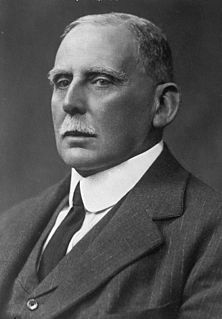
WSir Maurice Fitzmaurice CMG was an Irish civil engineer. He was apprenticed to Benjamin Baker and worked with him on the Forth Railway Bridge before going to Egypt to build the Aswan Dam for which he was appointed both a member of the Ottoman Order of the Mejidiye and a companion of the British Order of St Michael and St George. Following this Fitzmaurice was Chief Engineer to the London County Council and was responsible for the Blackwall, Rotherhithe and Woolwich tunnels. In later life his consultancy advised on docks and harbours across the British Commonwealth as well as the Sennar Dam in Sudan and he was recognised with the prestigious honour of the presidency of the Institution of Civil Engineers for the 1916-17 session.
 W
WSir Ralph Freeman was an English civil engineer, responsible for the design of the Humber Suspension Bridge - the longest in the world until 1998. He was the son of Sir Ralph Freeman, designer of the Sydney Harbour Bridge.
 W
WLieutenant Colonel Sir Frederick Harrison was railway manager and an officer in the British Army's Engineer and Railway Volunteer Staff Corps.
 W
WJohn Clarke Hawkshaw was a British civil engineer.
 W
WHarrison Hayter was a British engineer, participating in many significant railway construction projects in Britain and many harbour and dock constructions worldwide.
 W
WSir James Charles Inglis was a British civil engineer.
 W
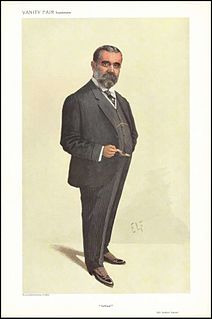
WSir Arthur Charles Lucas was an English first-class cricketer active 1871–81 who played for Middlesex and Surrey.
 W
WJohn Robinson McClean CB FRS FRSA FRAS, was a British civil engineer and Liberal Party politician.
 W
WLieutenant Colonel Augustus Charles Newman was an English recipient of the Victoria Cross, the highest and most prestigious award for gallantry in the face of the enemy that can be awarded to British and Commonwealth forces.
 W
WColonel Sir William Pollitt was an English railway manager and civic dignitary. From 1886 to 1902, he served as general manager of the Manchester, Sheffield and Lincolnshire Railway (MSL&R), which was renamed Great Central Railway in 1897. He was knighted in 1899 and appointed High Sheriff of Cheshire in 1908.
 W
WAlexander Ross was a British civil engineer particularly noted for his work with the railway industry.
 W
WSir Hubert Shirley-Smith, CBE, BSc, MICE was a British civil engineer.
 W
WErnest Frederic Crosbie Trench CBE, TD was a British civil engineer.
 W
WSir Alexander (Alec) Balmain Bruce Valentine OStJ MA, was Chairman of the London Transport Executive from 1959 to 1963 and Chairman of the London Transport Board from 1963 to 1965.