 W
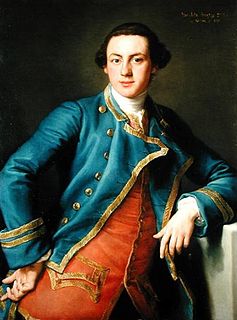
WSir John Armytage, 2nd Baronet was a British politician.
 W
WColonel Thomas Richard Beaumont of Bretton Hall, Wakefield, Yorkshire, was a British Tory politician and soldier.
 W
WGeorge James Bruere was the British Governor of Bermuda from 1764 until his death. Of all Bermuda's governors since 1612, his term of office was the longest. He had a difficult time during the American Revolutionary War and is thought to have died of stress caused by the interplay of Bermudians and Continental rebels.
 W
WGeneral Mordaunt Cracherode as a lieutenant-colonel was commanding officer of the marines during George Anson's voyage round the world. He held the post of Governor of Landguard Fort until he was appointed to succeed Lieutenant-General Churchill as Lieutenant Governor of Fort St. Philip in 1753.
 W
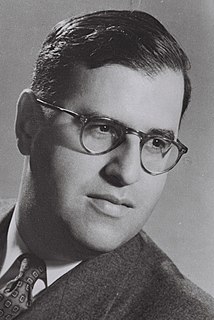
WAbba Solomon Meir Eban was an Israeli diplomat and politician, and a scholar of the Arabic and Hebrew languages.
 W
WAlbert Edward Walker Evans was an English film and television actor.
 W
WIan Fairweather was a Scottish painter resident in Australia for much of his life. He combined western and Asian influences in his work.
 W
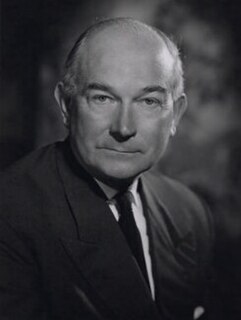
WSir Neville Major Ginner Faulks, MBE, TD was an English barrister and High Court judge.
 W
WWilliam Robert Foran (1881–1968) was a British Army officer, big game hunter and travel writer.
 W
WLancelot Guy Michael Hannen MC was a British Army officer of the Second World War who won the Military Cross for his part in holding Pidéura, Italy, in 1944 despite fierce German attacks. The citation noted Hannen's courage, leadership and endurance.
 W
WColonel Johnson Harmon was an army officer in colonial America. He led the expedition during Father Rale's War that killed Father Sébastien Rale in the Battle of Norridgewock. Harmon was heralded as a hero upon his return to Boston. New England Officer and historian Samuel Penahallow proclaimed the attack was "the greatest victory we have obtained in the three or four last wars."
 W
WLieutenant-Colonel Sir Gustavus Hume was a soldier in the British Army who served during the Crimean War (1854–56) and the Indian Rebellion of 1857. He took part in the Battle of the Alma, during which he was wounded, the Battle of Inkerman, the Siege of Sebastopol, and others. He was present at the Siege of Lucknow during the mutiny. He was later adjutant and lieutenant of the Queen's Body Guard of the Honourable Corps of Gentlemen at Arms. He was knighted by Queen Victoria in 1880.
 W
WSir John Jervis, PC was an English lawyer, law reformer and Attorney General in the administration of Lord John Russell. He subsequently became a judge and enjoyed a career as a robust but intelligent and innovative jurist, a career cut short by his early and sudden death.
 W
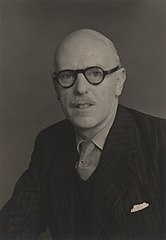
WSir Thomas Downing Kendrick was a British archaeologist and art historian.
 W
WLieutenant-Colonel David Robertson MacDonald of Kinlochmoidart FRSE was a British army officer linked to the history of Sri Lanka.
 W
WRoderick MacKenzie served as a British army officer in the First Highland Battalion of Foot. He appears to have been first remarked in the London Gazette on 18 January 1757, under Commandant Lieutenant Colonel Archibald Montgomery, Esq. It is unclear whether he "was badly wounded" in the capture of St. John's during the 1762 Battle of Signal Hill, as there were in the Gazette of 1757 three Captains and three Lieutenants with the same last name.
 W
WLeopold Samuel Marks, was an English writer, screenwriter, and cryptographer. During the Second World War he headed the codes office supporting resistance agents in occupied Europe for the secret Special Operations Executive organisation. After the war, Marks became a playwright and screenwriter, writing scripts that frequently utilised his war-time cryptographic experiences. He wrote the script for Peeping Tom, the controversial film directed by Michael Powell which had a disastrous effect on Powell's career, but was later described by Martin Scorsese as a masterpiece. In 1998, towards the end of his life, Marks published a personal history of his experiences during the war, Between Silk and Cyanide, which was critical of the leadership of SOE.
 W
WJosiah Martin was a British Army officer and colonial official who served as the ninth and last British governor of North Carolina from 1771 to 1776.
 W
WAngus McDonald was a prominent Scottish American military officer, frontiersman, sheriff and landowner in Virginia.
 W
WCharles Arundel "Joe" Moody was a Black British soldier who was the first commanding officer of the 3rd Battalion Regiment of the Jamaica Regiment.
 W
WCharles Morgan "of Dderw" was a Welsh politician who sat in the House of Commons between 1763 and 1787.
 W
WDaniel Charles, Count O'Connell was the uncle of Daniel O'Connell "the Liberator." He was from a noble family of Derrynane House, County Kerry, Ireland, but because of the Penal Laws (Ireland) of the time, which forbade a Catholic to have any education or profession, he, like many other ambitious young Irishmen, went to the Continent for an education, and remained abroad. He entered the service of the king of France in the Royal Swedish Regiment in 1761, and in 1769 was transferred to Lord Clare's Regiment of the Irish Brigade (French) and served in Europe and Mauritius until 1778. Then he was appointed Lieutenant-Colonel and transferred back to the Royal Swedish Regiment, with which he saw action at the siege of Port Mahon and at the Great Siege of Gibraltar. "At Gibraltar he was on board one of the famous floating batteries and was severely wounded." He was later appointed Colonel Commander of the Régiment de Salm-Salm, and was created a Chevalier of the Order of Saint Louis. He also was appointed to a military committee charged with revising French infantry tactics.
 W
WSamuel Ogle was the 16th, 18th and 20th Proprietary Governor of Maryland from 1731 to 1732, 1733 to 1742, and 1746/1747 to 1752.
 W
WPeter Purves Smith, born Charles Roderick Purves Smith, was an Australian painter. Born in Melbourne, Purves Smith studied at the Grosvenor School of Modern Art in London and under progressive art teacher George Bell in Melbourne.
 W
WSir Thomas Reade was a British army officer during the Napoleonic Wars, known also as a collector.
 W
WWilliam Robert Ashley Birch Reynardson CBE was a South African-born British barrister who was instrumental in the development of maritime law. He was vice-president of the Comité Maritime International and chairman of the Garsington Opera.
 W
WSir John Saunders Sebright, 7th Baronet,, of Besford, Worcestershire, and Beechwood Park, Hertfordshire, was an English politician and agricultural innovator.
 W
WEvelyn Francis Edward Seymour, 17th Duke of Somerset was a British Army officer, landowner, peer, and for eight years Lord Lieutenant of Wiltshire. He was also a baronet. Between 1 May 1882 and 5 May 1931, he was styled as Lord Seymour.
 W
WJohn Turnley was an Irish politician and activist. Originally from a unionist background, he was gradually drawn to Irish nationalism and became a republican activist. He was assassinated in 1980 by loyalists in Carnlough, County Antrim.
 W
WGeorge Wathen (1762–1849) was an English actor, stage manager and theatre owner who performed in London in the late 1700s and early 1800s. He was the father of the poet and author Marianne Baillie.