 W
WThe Buckley-class destroyer escorts were 102 destroyer escorts launched in the United States in 1943–44. They served in World War II as convoy escorts and anti-submarine warfare ships. The lead ship was USS Buckley which was launched on 9 January 1943. The ships had General Electric steam turbo-electric transmission. The ships were prefabricated at various factories in the United States, and the units brought together in the shipyards, where they were welded together on the slipways.
 W
WThe Captain class was the designation given to 78 frigates of the Royal Navy, constructed in the United States of America, launched in 1942–1943 and delivered to the United Kingdom under the provisions of the Lend-Lease agreement. They were drawn from two classes of the American destroyer escort classification: 32 of the GMT (Evarts) Type and 46 of the TE (Buckley) Type. Upon reaching the UK the ships were substantially modified by the Royal Navy, making them distinct from the US Navy destroyer escort ships.
 W
WThe Evarts-class destroyer escorts were destroyer escorts launched in the United States in 1942–44. They served in World War II as convoy escorts and anti-submarine warfare ships. They were also known as the GMT or "short hull" DE class, with GMT standing for General Motors Tandem Diesel drive.
 W
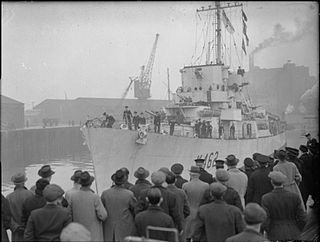
WHMS Affleck was a Captain class frigate which served during World War II. The ship was named after Sir Edmund Affleck, commander of HMS Bedford at the Moonlight Battle in 1780 during the American Revolutionary War.
 W
WHMS Aylmer was a Captain class frigate of the Royal Navy that served during World War II. The ship was named after Matthew Aylmer, commander of HMS Royal Katherine at the Battle of Barfleur in 1692 during the War of the Grand Alliance.
 W
WHMS Balfour was a Captain-class frigate of the Royal Navy which served during World War II. She was built as a TE (Buckley) type destroyer escort in the United States and delivered to the Royal Navy under the Lend-Lease arrangement.
 W
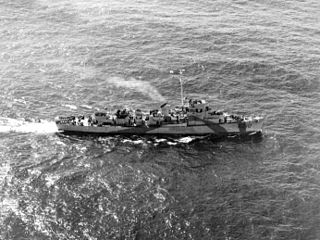
WUSS Bayntun (DE-1) the first of the American built lend lease Captain-class frigates in the Royal Navy as HMS Bayntun (K310). She was named for Henry William Bayntun.
 W
WHMS Bentinck was a Captains class frigate during World War II. Named after John Bentinck commander of HMS Niger which participated in a number of engagements during the Seven Years' War including one in which HMS Niger defeated the French 74 gun ship of the line Diadem.
 W
WHMS Berry (K312) was a Captain-class frigate, built in the United States as a Evarts-class destroyer escort, and transferred to the Royal Navy under the terms of Lend-Lease, which served in World War II. She was named after Rear Admiral Sir Edward Berry (1768-1831).
 W
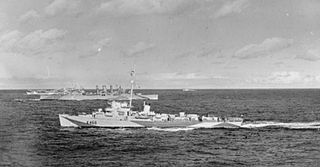
WHMS Bickerton was a Captain-class frigate of the TE (Buckley) type during World War II. Named after Sir Richard Bickerton commander of HMS Terrible at the First Battle of Ushant during the American Revolutionary War.
 W
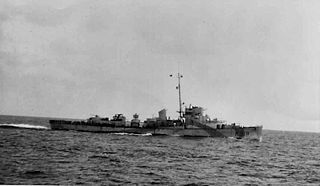
WHMS Blackwood was a Captain-class frigate of the Evarts-class of destroyer escort, originally commissioned to be built for the U.S. Navy. Before she was finished in 1942, she was transferred to the Royal Navy under the terms of Lend-Lease, and saw service during the Second World War.
 W
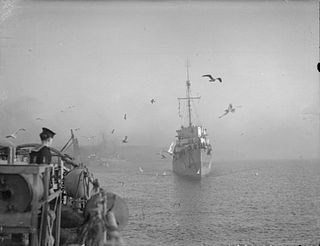
WHMS Bligh was a Captain-class frigate active during World War II. She was named after William Bligh, commander of HMS Director at the Battle of Camperdown during the French Revolutionary War, and commander of HMS Bounty.
 W
WHMS Braithwaite was a Captain-class frigate of the Royal navy during World War II. She was named after Captain Samuel Braithwaite of HMS Kingston, who had an eventful career, taking part in numerous engagements during the 18th century.
 W
WHMS Byard was a Captain-class frigate of the Royal Navy during World War II. She was named for Sir Thomas Byard, who commanded HMS Bedford at the Battle of Camperdown in 1797 during the French Revolutionary Wars.
 W
WHMS Byron was a US-built Captain class frigate of the Royal Navy during World War II. Named after Vice-Admiral The Honourable John Byron whose frequent encounters with bad weather in ensuing years won him the sobriquet, “Foul Weather Jack”. Originally laid down as DE-79, a turbo-electric (TE) type Buckley-class destroyer escort, she was diverted to the Royal Navy and named HMS Byron before the launch.
 W
WHMS Calder was a Captain class frigate of the Royal Navy during World War II. It was named after Admiral Sir Robert Calder, Bt. KCB, who was appointed Captain of the Fleet to Admiral John Jervis in 1796, and saw action at the battle of Cape St Vincent on 14 February 1797. Originally destined for the US Navy as a turbo-electric (TE) type Buckley-class destroyer escort, HMS Calder was provisionally given the name USS Formoe. However, the delivery was diverted to the Royal Navy before the launch.
 W
WHMS Conn was a TE ("Buckley") Type Captain class frigate of the Royal Navy. She served during World War II as a convoy escort and anti-submarine warfare vessel in the Battle of the Atlantic and was credited with the destruction of two U-boats during the conflict.
WHMS Cosby was a Buckley-class Captain-class frigate during World War II, it was named after Captain Phillips Cosby (1727–1808) of HMS Robust during the American Revolutionary War.
 W
WHMS Curzon (K513) was a Captain-class frigate of the British Royal Navy that served during World War II. The ship was laid down as a Buckley-class destroyer escort at the Bethlehem-Hingham Shipyard at Hingham, Massachusetts on 23 June 1943, with the hull number DE-84, and launched on 18 September 1943. The ship was transferred to the UK under Lend-Lease on 20 November 1943, and named after either Captain Henry Curzon, who commanded Pallas at the First Battle of Groix (1795), or Captain Edward Curzon who commanded Asia at the Battle of Navarino (1827). There is official uncertainty about which is correct.
 W
WHMS Dacres (K472) was a Captain-class frigate, built in the United States as a Evarts-class destroyer escort, and transferred to the Royal Navy under the terms of Lend-Lease, which served in World War II.
 W
WHMS Duckworth (K351) was a Captain-class frigate of the Royal Navy. She served during the Second World War as a convoy escort and anti-submarine warfare vessel in the Battle of the Atlantic and was an effective U-boat killer, being credited with the destruction of five U-boats during the conflict.
 W
WHMS Ekins (K352) was a British Captain-class frigate of the Royal Navy that served during World War II. Originally constructed as a United States Navy Buckley class destroyer escort, she served in the Royal Navy from 1943 to 1945.
 W
WThe second HMS Essington (K353), and the first ship of the name to see service, was a British Captain-class frigate of the Royal Navy in commission during World War II. Originally constructed as a United States Navy Buckley-class destroyer escort, she served in the Royal Navy from 1943 to 1945.
 W
WThe second HMS Fitzroy (K553) was a British Captain-class frigate of the Royal Navy in commission during World War II. Originally constructed as a United States Navy Buckley class destroyer escort, she served in the Royal Navy from 1943 to 1945.
 W
WThe second HMS Foley (K474) was a British Captain-class frigate of the Royal Navy in commission during World War II. Originally constructed as the United States Navy Evarts-class destroyer escort USS Gillette (DE-270), she served in the Royal Navy from 1943 to 1945 and in the U.S. Navy as USS Foley (DE-270) from August to October 1945.
 W
WHMS Gore (K481) was a British Captain-class frigate of the Royal Navy in commission during World War II. Originally constructed as the United States Navy Evarts-class destroyer escort USS Herzog (DE-277), she served in the Royal Navy from 1943 to 1946.
 W
WHMS Grindall (K477) was a British Captain-class frigate of the Royal Navy in commission during World War II. Originally constructed as the United States Navy Evarts-class destroyer escort USS Sanders (DE-273), she served in the Royal Navy from 1943 to 1945 and then in the U.S. Navy as USS Grindall (DE-273) from August to October 1945.
 W
WHMS Hotham (K583) was a Captain-class frigate of the Buckley class of destroyer escort, originally intended for the United States Navy. Before she was finished in 1944, she was transferred to the Royal Navy under the terms of Lend-Lease, and was in commission from 1944 to 1956, including service during World War II.
 W
WHMS Inman (K471) was a Captain-class frigate of the Royal Navy in commission in World War II. Originally built as the United States Navy Evarts-class destroyer escort DE-526, she served in the Royal Navy from 1944 to 1945.
 W
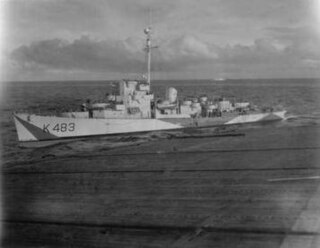
WHMS Kempthorne (K483) was a Captain-class frigate of the Royal Navy and named after Captain John Kempthorne of HMS Mary Rose in 1669.
 W
WHMS Lawford (K514) was a Royal Navy converted Captain class frigate, built in the US in 1944. She was converted into an HQ ship for the Normandy landings. On 8 June 1944, whilst operating off Juno Beach, she was hit by enemy fire during an air attack and sunk. Thirty-seven of her crew died. The Royal Navy's damage summary report states that the ship was hit by an "aerial torpedo", which has been taken to mean a torpedo dropped from an aircraft. However, a survey of the ship undertaken as part of the Channel 4 TV series "Wreck Detectives" found evidence that the vessel was broken up and sunk by an internal explosion, indicating a hit from one or more bombs or from an early guided missile such as an Hs-293 or a Fritz X. The ship was sunk by KG 100.
 W
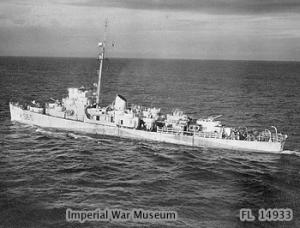
WHMS Loring (K565) was a British Captain-class frigate of the Royal Navy in commission during World War II. Originally constructed as the United States Navy Evarts-class destroyer escort DE-520, she served in the Royal Navy from 1943 to 1945.
 W
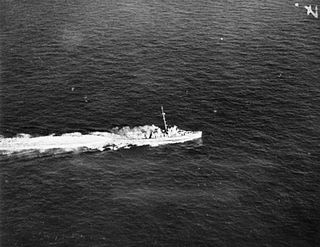
WThe second HMS Moorsom (K567) was a British Captain-class frigate of the Royal Navy in commission during World War II. Originally constructed as the United States Navy Evarts-class destroyer escort DE-522, she served in the Royal Navy from 1943 to 1945.
 W
WThe second HMS Mounsey (K569) was a British Captain-class frigate of the Royal Navy in commission during World War II. Originally constructed as the United States Navy Evarts-class destroyer escort DE-524, she served in the Royal Navy from 1943 to 1946.
 W
WHMS Retalick (K555) was a British Captain-class frigate of the Royal Navy in commission during World War II. Originally constructed as a United States Navy Buckley class destroyer escort, she served in the Royal Navy from 1943 to 1945.
 W
WHMS Riou (K557) was a British Captain-class frigate of the Royal Navy in commission during World War II. Originally constructed as a United States Navy Buckley class destroyer escort, she served in the Royal Navy from 1943 to 1945.
 W
WHMS Rutherford (K558) was a British Captain-class frigate of the Royal Navy in commission during World War II. Originally constructed as a United States Navy Buckley-class destroyer escort, she served in the Royal Navy from 1943 to 1945.
 W
WHMS Stayner (K573) was a British Captain-class frigate of the Royal Navy in commission during World War II. Originally constructed as a United States Navy Buckley class destroyer escort, she served in the Royal Navy from 1943 to 1945.
 W
WHMS Stockham (K562) was a British Captain-class frigate of the Royal Navy in commission during World War II. Originally constructed as a United States Navy Buckley class destroyer escort, she served in the Royal Navy from 1943 to 1946.
 W
WHMS Thornborough (K574), sometimes spelled Thornbrough, was a British Captain-class frigate of the Royal Navy in commission during World War II. Originally constructed as a United States Navy Buckley class destroyer escort, the ship served in the Royal Navy from 1943 to 1945.
 W
WThe fourth HMS Torrington (K577) was a British Captain-class frigate of the Royal Navy in commission during World War II. Originally constructed as a United States Navy Buckley class destroyer escort, she served in the Royal Navy from 1944 to 1946.
 W
WHMS Trollope (K575) was a British Captain class frigate of the Royal Navy in commission during World War II. Originally constructed as a United States Navy Buckley class destroyer escort, she served in the Royal Navy from January to July 1944, when she was lost.