 W
WThe Astaracian age is a period of geologic time, equivalent with the Middle Miocene and used more specifically with European Land Mammal Ages. It precedes the Vallesian age and follows the Orleanian age. The Astaracian overlaps the Langhian and Serravallian ages.
 W
WThe Calymmian Period is the first geologic period in the Mesoproterozoic Era and lasted from 1600 Mya to 1400 Mya. Instead of being based on stratigraphy, these dates are defined chronometrically.
 W
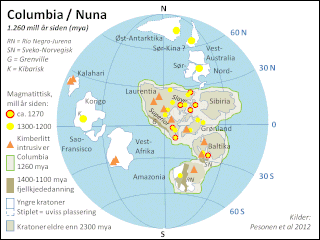
WThe Ectasian Period is the second geologic period in the Mesoproterozoic Era and lasted from 1400 Mya ago to 1200 Mya. Instead of being based on stratigraphy, these dates are defined chronometrically.
 W
WIn the geologic timescale, the Middle Triassic is the second of three epochs of the Triassic period or the middle of three series in which the Triassic system is divided in chronostratigraphy. The Middle Triassic spans the time between 247.2 Ma and 237 Ma. It is preceded by the Early Triassic epoch and followed by the Late Triassic epoch. The Middle Triassic is divided into the Anisian and Ladinian ages or stages.
 W
WThe Orosirian Period is the third geologic period in the Paleoproterozoic Era and lasted from 2050 Mya to 1800 Mya. Instead of being based on stratigraphy, these dates are defined chronometrically.
 W
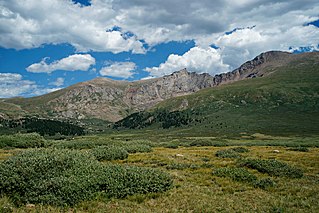
WThe Paleoarchean, also spelled Palaeoarchaean, is a geologic era within the Archaean eon. It spans the period of time 3,600 to 3,200 million years ago—the era is defined chronometrically and is not referenced to a specific level of a rock section on Earth. The name derives from Greek "Palaios" ancient. The oldest ascertained life form of fossilized bacteria in microbial mats, 3,480 million years old, found in the Dresser Formation in Western Australia, is from this era. The first supercontinent Vaalbara formed during this period.
 W
WThe Preboreal is an informal stage of the Holocene epoch. It is preceded by the Tarantian and succeeded by the Boreal. It lasted from 10,300 to 9,000 BP in radiocarbon years or 8350 BC to 7050 BC in Gregorian calendar years. It is the first stage of the Holocene epoch.
 W
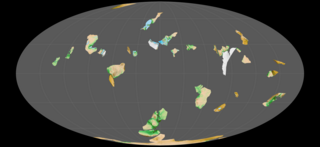
WThe Rhyacian Period is the second geologic period in the Paleoproterozoic Era and lasted from 2300 Mya to 2050 Mya. Instead of being based on stratigraphy, these dates are defined chronometrically.
 W
WThe Riphean is a stage or age of the geologic timescale from 1,600 to 650 million years ago. The name Riphean is used in the Proterozoic stratigraphy of Russia and the Fennoscandian Shield in Finland. It was also used in a number of older international geologic timescales but, in the most recent timescales of the ICS, it is replaced by the Calymmian, Ectasian, Stenian, Tonian and Cryogenian periods of the Neoproterozoic and Mesoproterozoic eras.
 W
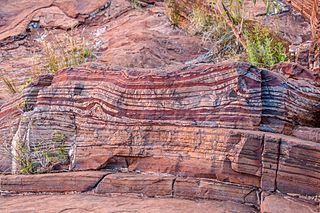
WThe Siderian Period is the first geologic period in the Paleoproterozoic Era and lasted from 2500 Ma to 2300 Ma. Instead of being based on stratigraphy, these dates are defined chronometrically.
 W
WThe Statherian Period is the final geologic period in the Paleoproterozoic Era and lasted from 1800 Mya to 1600 Mya. Instead of being based on stratigraphy, these dates are defined chronometrically.
 W
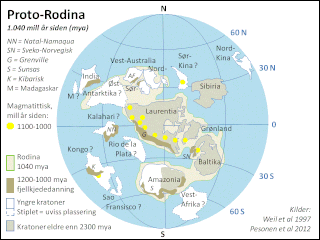
WThe Stenian Period is the final geologic period in the Mesoproterozoic Era and lasted from 1200 Mya to 1000 Mya. Instead of being based on stratigraphy, these dates are defined chronometrically. The name derives from narrow polymetamorphic belts formed over this period.