 W
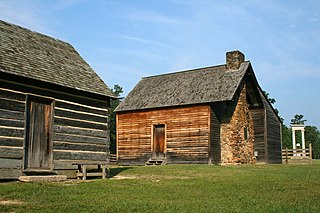
WBennett Place is a former farm and homestead in Durham, North Carolina, which was the site of the last surrender of a major Confederate army in the American Civil War, when Joseph E. Johnston surrendered to William T. Sherman. The first meeting saw Sherman agreeing to certain political demands by the Confederates, which were promptly rejected by the Union cabinet in Washington. Another meeting had to be held to agree on military terms only, in line with Robert E. Lee’s recent surrender to Ulysses S. Grant. This effectively ended the war.
 W
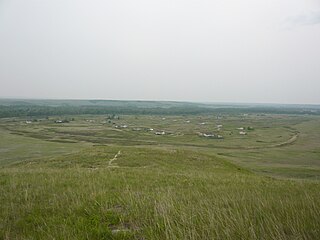
WBlackfoot Crossing Historical Park is a complex of historic sites on the Siksika 146 Indian reserve in Alberta, Canada. This crossing of the Bow River was traditionally a bison-hunting and gathering place for the Siksika people and their allies in the Blackfoot Confederacy.
 W
WThe Compiègne Wagon was the train carriage in which both the Armistice of 11 November 1918 and Armistice of 22 June 1940 were signed.
 W
WThe Dancing Rabbit Creek Treaty Site is a historic Choctaw Native American gathering place in rural Noxubee County, Mississippi. Located near a freshwater spring above the floodplain of Dancing Rabbit Creek in the southwestern part of the county, it was the site of a treaty negotiation between the Choctaw and the federal government in 1830, resulting in the Treaty of Dancing Rabbit Creek, in which the Choctaw agreed to surrender their ancestral lands for territory in what is now Oklahoma. It was the first treaty negotiated after passage of the Indian Removal Act, and served as a model for other treaties passed pursuant to that act. It also led to the Choctaw Trail of Tears. The site, now marked by a stone memorial and a small Choctaw cemetery, was designated a National Historic Landmark in 1996.
 W
WThe Glade of the Armistice is a French national and war memorial in the Forest of Compiègne in Picardy, France, near the city of Compiègne and approximately 60 kilometres (37 mi) north of Paris. It was built at the location where the Germans signed the Armistice of 11 November 1918 that ended World War I. During World War II, Adolf Hitler chose the same spot for the French and Germans to sign the Armistice of 22 June 1940 after Germany won the Battle of France. The site was destroyed by the Germans but rebuilt after the war.
 W
WThe Medicine Lodge Peace Treaty Site was the location in present-day Kansas of the signing of the Medicine Lodge Treaty in October 1867 by the United States government with major Western Native American tribes of the region. The treaty, whose peace lasted less than one year, was the first in which the United States formally adopted the policy of attempting to acculturate Native Americans to European ways. The treaty site is located south of Medicine Lodge, around the confluence of Elm Creek and the Medicine Lodge River; it was designated a U.S. National Historic Landmark in 1969 and is listed on the National Register of Historic Places.
 W
WThe Moore House is a historic building located within Colonial National Historical Park, in York County, Virginia. During the American Revolutionary War, it was the site of negotiations for British General Charles Cornwallis's surrender at the Siege of Yorktown.
 W
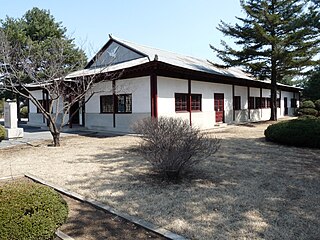
WThe North Korea Peace Museum is in the building constructed to house the signing of the Korean War Armistice Agreement on 27 July 1953. It is located in the former village of Panmunjeom (P'anmunjŏm) in North Hwanghae Province, North Korea.
 W
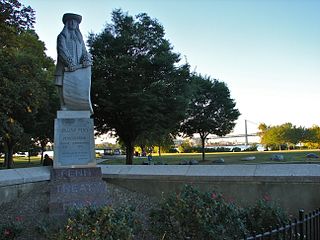
WPenn Treaty Park is a small park on the western bank of the Delaware River, in the Fishtown neighborhood of Philadelphia, Pennsylvania. It is located on Beach Street, near its intersection with Delaware Avenue.
 W
WThe Tellico Blockhouse was an early American outpost located along the Little Tennessee River in what developed as Vonore, Monroe County, Tennessee. Completed in 1794, the blockhouse was a US military outpost that operated until 1807; the garrison was intended to keep peace between the nearby Overhill Cherokee towns and encroaching early Euro-American pioneers in the area in the wake of the Cherokee–American wars.
 W
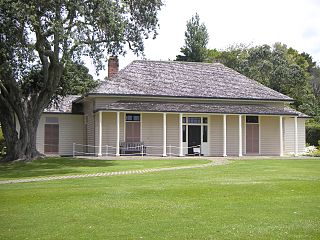
WThe Treaty House at Waitangi in Northland, New Zealand, is the former house of the British Resident in New Zealand, James Busby. The Treaty of Waitangi, the document that established the British Colony of New Zealand, was signed in the grounds of the Treaty House on 6 February 1840.