 W
WA Registered Monument includes Historic Sites, Places of Scenic Beauty, and Natural Monuments registered in accordance with the Law for the Protection of Cultural Properties 1950. As of 21 November 2014, there were ninety-three registered Monuments, Makino Memorial Garden and the former residence of Okakura Tenshin being registered both as Historic Sites and Places of Scenic Beauty.
 W
WChinda Falls is a double waterfall on the Ōno River in Bungo-ōno, Ōita Prefecture, Japan.
 W
WEhime Prefectural Matsuyama Central Senior High School , abbreviated as Matsuyama Chuo or MCHS or MCH, is a public high school located in Ido-machi, Matsuyama, Ehime, Shikoku, Japan established in 1986 and opened in 1987 as the newest prefectural academic high school in Ehime Prefecture.
 W
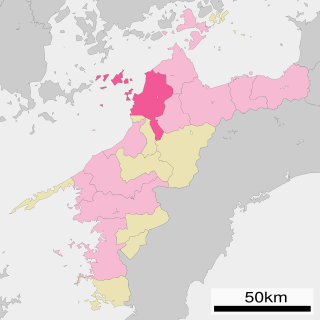
WEhime Prefectural Mishima High School is a public high school located in Mishimachūō, Shikokuchūō, Ehime, Shikoku, Japan opened in 1923 as the Ehime Prefectural Mishima Middle School .
 W
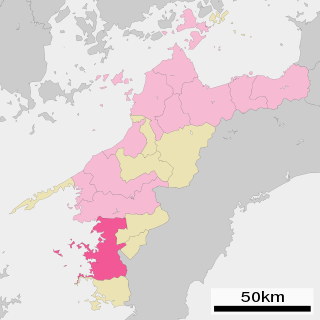
WEhime Prefectural Uwajima Fisheries High School is a public high school located in Meirinchō, Uwajima, Ehime, Shikoku, Japan established in 1945 as the Ehime Prefectural Fisheries School .
 W
WThe Ishitani Residence is a family residence in Chizu, Tottori Prefecture, Japan. In the Edo period Chizu flourished as one of Japan's largest shukuba (宿場) or post stations, the Chizushuku (智頭宿). The Ishitani family, an upper-class family, built a residence in the area. In the early 20th century the residence was greatly expanded by incorporating Western-style elements into the Japanese-style structure. The residence is spread across two floors and forty rooms. The Ishitani Residence is an important part of the Itaibara settlement. A number of its buildings have been designated Important Cultural Properties and its gardens are a registered Place of Scenic Beauty.
 W
WThe Kobe City Museum opened in Kobe, Japan in 1982. It is one of Japan's many museums which are supported by a municipality.
 W
WKobe College , abbreviated to KC, is a private non-sectarian liberal arts college located in Nishinomiya, Hyōgo, Japan. Chartered in 1948, it is the first women's college with university status in West Japan.
 W
WKwansei Gakuin University , colloquially known as Kangaku (関学), is a private, non-denominational Christian coeducational university in Japan. The university offers Bachelor's, Master's, and Doctoral degrees to around 25,000 students in almost 40 different disciplines across 11 undergraduate and 14 graduate programs. The university has a central campus in the city of Nishinomiya, and also has satellite campuses in Nishinomiya, Sanda, Osaka, and Tokyo. Kwansei Gakuin University has been selected for inclusion in the Japanese government's Top Global University Project as a Type B university. The university is often referred to as one of the four leading private universities in the greater Kansai region.
WMakino Memorial Garden is located in Nerima, Tokyo, Japan and dedicated to the life and works of Makino Tomitarō, "Father of Japanese Botany".
 W
WMinami-za is the primary kabuki theatre in Kyoto, Japan. It was founded in 1610 as Shijō Minami-za. The current building, with a 1,086 seat capacity, was built in 1929.
 W
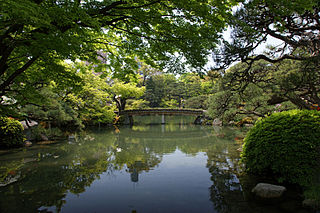
WŌhori Park is a park in Chūō-ku, Fukuoka, Japan and a registered Place of Scenic Beauty.
 W
WThe gardens of Sōraku-en (相楽園) are in Chūō-ku, Kobe, Japan. Formerly attached to the Taishō-era residence of Kodera Yasujirō, ownership passed to the city of Kobe in 1941. Since then they have been open to the public. Most of the former residence was destroyed in the Pacific War; the stables of 1907 survived and have been designated an Important Cultural Property.
 W
WThe Tateyama Sabō Erosion Control Works Service Train , commonly called Tateyama Erosion Control Train , is a Japanese, 2 ft narrow gauge industrial railway line in Tateyama, Toyama. It is operated by the Tateyama Mountain Area Sabō Office, which belongs to the Hokuriku Regional Development Bureau of the Ministry of Land, Infrastructure and Transport.
 W
WThe Wadamisaki Battery is a coastal defense located in Hyōgo-ku, Kobe, Japan. It was built in 1864 by the Tokugawa shogunate in the Bakumatsu period, shortly before the end of the Shōgun's reign. One of many batteries built by the shogunate towards the end of its reign, the Wadamisaki Battery is the only one remaining from several that were built around Osaka Bay and is today listed in the Japanese government's register of historic sites.