 W
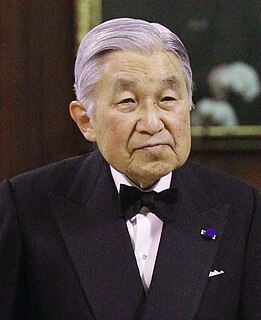
WAkihito is a member of the Imperial House of Japan who reigned as the 125th emperor of Japan, according to the traditional order of succession, from 7 January 1989 until 30 April 2019. He presided over the Heisei era, Heisei being an expression of achieving peace worldwide.
 W
WEmperor Daigo was the 60th emperor of Japan, according to the traditional order of succession.
 W
WEmperor Fushimi was the 92nd emperor of Japan, according to the traditional order of succession. His reign spanned the years from 1287 through 1298.
 W
WEmpress Genmei , also known as Empress Genmyō, was the 43rd monarch of Japan, according to the traditional order of succession. Genmei's reign spanned the years 707 through 715 CE.
 W
WEmperor Go-En'yū was the 5th of the Emperors of Northern Court during the period of two courts in Japan. According to pre-Meiji scholars, his reign spanned the years from 1371 through 1382.
 W
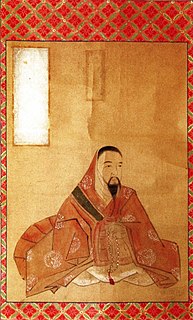
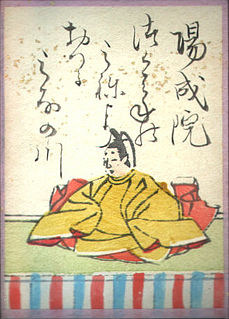
WEmperor Go-Kameyama was the 99th emperor of Japan, according to the traditional order of succession. He ruled from 1383 to October 21, 1392, becoming the last Emperor of the Southern Court. His personal name was Hironari (熙成).
 W
WEmperor Go-Kōgon was the 4th of the Emperors of Northern Court during the Period of the Northern and Southern Courts. According to pre-Meiji scholars, his reign spanned the years from 1352 through 1371.
 W
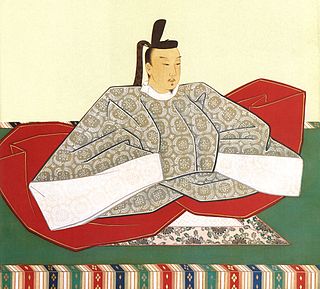
WEmperor Go-Komatsu was the 100th emperor of Japan, according to the traditional order of succession, and the sixth and final Emperor of the Northern Court.
 W
WEmperor Go-Mizunoo was the 108th Emperor of Japan, according to the traditional order of succession. Go-Mizunoo's reign spanned the years from 1611 through 1629, and was the first emperor to reign entirely during the Edo period.
 W
WEmpress Go-Sakuramachi was the 117th monarch of Japan, according to the traditional order of succession. She was named after her father Emperor Sakuramachi, the word go- (後) before her name translates in this context as "later" or "second one". Her reign spanned the years from 1762 through to her abdication in 1771. The only significant event during her reign was an unsuccessful outside plot, that intended to displace the shogunate with restored Imperial powers.
 W
WEmperor Go-Sanjō was the 71st emperor of Japan, according to the traditional order of succession.
 W
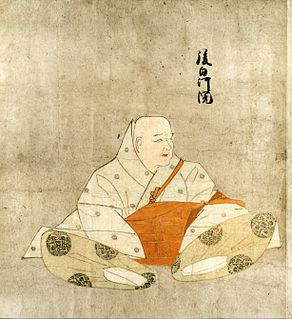
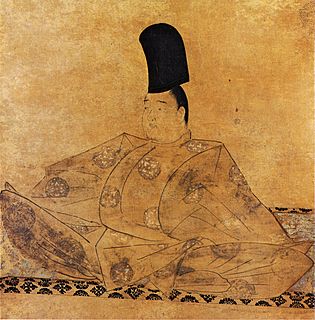
WEmperor Go-Shirakawa was the 77th emperor of Japan, according to the traditional order of succession. His de jure reign spanned the years from 1155 through 1158, though arguably he effectively maintained imperial power for almost thirty-seven years through the insei system – scholars differ as to whether his rule can be truly considered part of the insei system, given that the Hōgen Rebellion undermined the imperial position. However, it is broadly acknowledged that by politically outmaneuvering his opponents, he attained greater influence and power than the diminished authority of the emperor's position during this period would otherwise allow.
 W
WEmperor Go-Toba was the 82nd emperor of Japan, according to the traditional order of succession. His reign spanned the years from 1183 through 1198.
 W
WEmperor Go-Uda was the 91st emperor of Japan, according to the traditional order of succession. His reign spanned the years from 1274 through 1287.
 W
WEmperor Hanazono was the 95th emperor of Japan, according to the traditional order of succession. His reign spanned the years from 1308 through 1318.
 W
WEmperor Higashiyama was the 113th emperor of Japan, according to the traditional order of succession. Higashiyama's reign spanned the years from 1687 through to his abdication in 1709 corresponding to the Genroku era. The previous hundred years of peace and seclusion in Japan had created relative economic stability. The arts and theater and architecture flourished.
 W
WEmperor Ichijō was the 66th emperor of Japan, according to the traditional order of succession.
 W
WEmpress Jitō was the 41st monarch of Japan, according to the traditional order of succession.
 W
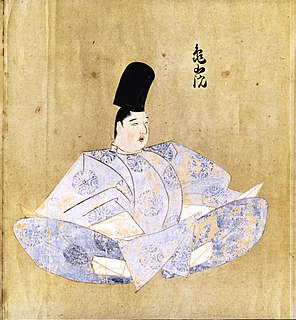
WEmperor Junna was the 53rd emperor of Japan, according to the traditional order of succession. Junna reigned from 823 to 833.
 W
WEmperor Kameyama was the 90th emperor of Japan, according to the traditional order of succession. His reign spanned the years from 1260 through 1274.
 W
WEmperor Kazan was the 65th emperor of Japan, according to the traditional order of succession.
 W
WEmpress Kōgyoku , also known as Empress Saimei , was the 35th and 37th monarch of Japan, according to the traditional order of succession.
 W
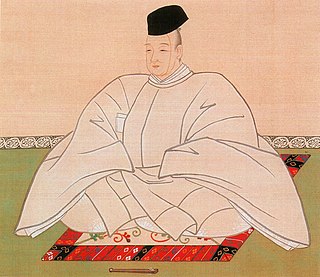
WEmperor Kōkaku was the 119th Emperor of Japan, according to the traditional order of succession. Kōkaku reigned from 16 December 1780 until his abdication on 7 May 1817 in favor of his son, Emperor Ninkō. After his abdication, he ruled as Daijō Tennō also known as a Jōkō (上皇) until his death in 1840. The next emperor to abdicate of his own accord was Akihito, the Emperor of the Heisei Era, in 2019, 202 years later.
 W
WEmpress Kōken , also known as Empress Shōtoku , was the 46th and the 48th monarch of Japan, according to the traditional order of succession.
 W
WEmperor Kōmyō was the second of the Emperors of Northern Court, although he was the first to be supported by the Ashikaga Bakufu. According to pre-Meiji scholars, his reign spanned the years from 1336 through 1348.
 W
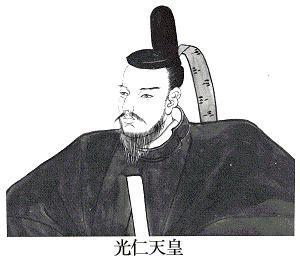
WEmperor Kōnin was the 49th emperor of Japan, according to the traditional order of succession. Kōnin's reign lasted from 770 to 781.
 W
WEmpress Meishō was the 109th monarch of Japan, according to the traditional order of succession. Her reign lasted from 1629 to 1643.
 W
WEmperor Nakamikado was the 114th Emperor of Japan, according to the traditional order of succession. Nakamikado's birth name was Yoshihito before he became enthroned as Emperor in 1709, a reign that would last until 1735 with his abdication and retirement. As Emperor, Nakamikado had an increasingly warmed relationship with the shogunate in part due to his father's efforts. Relations warmed up to the point of family marriage talks but these fell through due to the sudden death of the potential Shōgun groom. Events that surrounded the Emperor included at least 2 major earthquakes, the largest Ryukyuan diplomatic mission of the Edo period, the Kyōhō Reforms, and the Kyōhō famine. It is unclear what role if any the Emperor had in these concurrent events as the role of "Emperor" was a figurehead at the time. Nakamikado's family included at least 14 children mothered by his wife, and 5 concubines. Nakamikado abdicated the throne in 1735 in favor of his first son, and died two years later.
 W
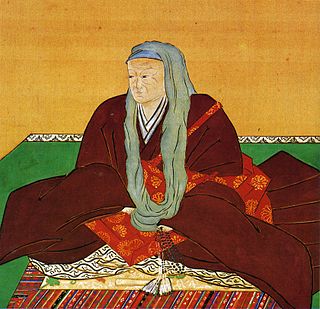
WEmperor Ōgimachi was the 106th Emperor of Japan, according to the traditional order of succession. He reigned from October 27, 1557, to his abdication on December 17, 1586, corresponding to the transition between the Sengoku period and the Azuchi–Momoyama period. His personal name was Michihito (方仁).
 W
WEmperor Reigen was the 112th emperor of Japan, according to the traditional order of succession. Reigen's reign spanned the years from 1663 through 1687.
 W
WEmperor Saga was the 52nd emperor of Japan, according to the traditional order of succession. Saga's reign spanned the years from 809 through 823.
 W
WEmperor Sakuramachi was the 115th Emperor of Japan, according to the traditional order of succession. Sakuramachi's birth name was Teruhito before he became enthroned as Emperor in 1735, a reign that would last until 1747 with his retirement. As with previous Emperors during the Edo period, the Tokugawa shogunate had control over Japan. The Emperor's role was a religious figure who performed limited duties. This changed when Sakuramachi was granted permission from the Shōgun to restore some Imperial rites. Ceremonies such as the Harvest Festival that had previously been absent for over 250 years were now allowed. Sakuramachi had one wife and a concubine with whom he fathered 4 children. His first son would go on to become Emperor Momozono, while his second daughter would later be Empress Go-Sakuramachi. Sakuramachi died on 28 May 1750, which was almost three years after his abdication.
 W
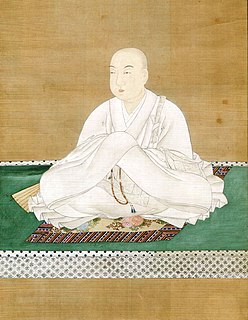
WEmperor Sanjō was the 67th emperor of Japan, according to the traditional order of succession.
 W
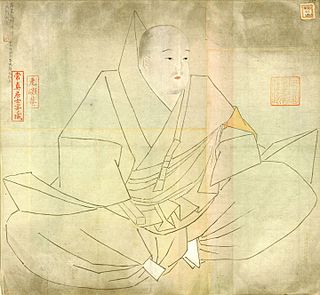
WEmperor Seiwa was the 56th emperor of Japan, according to the traditional order of succession.
 W
WEmperor Shirakawa was the 72nd emperor of Japan, according to the traditional order of succession.
 W
WEmperor Shōmu was the 45th emperor of Japan, according to the traditional order of succession. Shōmu's reign spanned the years 724 through 749, during the Nara period.
 W
WEmperor Sukō was the third of Emperors of Northern Court during the Period of the Northern and Southern Courts in Japan. According to pre-Meiji scholars, his reign spanned the years from 1348 through 1351.
 W
WEmperor Toba was the 74th Emperor of Japan, according to the traditional order of succession.
 W
WEmperor Uda was the 59th emperor of Japan, according to the traditional order of succession.
 W
WEmperor Yōzei was the 57th emperor of Japan, according to the traditional order of succession.